Thursday, December 25, 2025
ADVT 
Health

DNA 'glue' can help grow tissues, organs

Darpan News Desk IANS, 15 Jan, 2015 11:18 AM
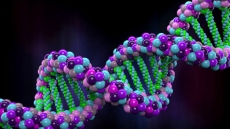
    DNA molecules can act as a glue to hold together 3D-printed materials that could be used to grow tissues and organs in the lab, researchers report.
     
    According to Andrew Ellington, professor of chemistry and biochemistry at The University of Texas - Austin, researchers have used DNA to assemble objects so tiny that humans cannot see them with the naked eye.
     
    Making them into larger, visible objects is cost-prohibitive. Current methods also do not allow for much control or flexibility in the types of materials that are created.
     
    With this in mind, Ellington's group set out to create a larger, more affordable material held together with DNA.
     
    The researchers developed DNA-coated nanoparticles made of either polystyrene or polyacrylamide material.
     
    DNA binding adhered these inexpensive nanoparticles to each other, forming gel-like materials that they could extrude from a 3D printer.
     
    The materials were easy to see and could be manipulated without a microscope.
     
    The DNA adhesive also allowed the researchers to control how these gels came together.
     
    "They showed that human cells could grow in the gels, which is the first step toward the ultimate goal of using the materials as scaffolds for growing tissues," the authors noted.
     
    The process was described in the journal ACS Biomaterials Science & Engineering.

    MORE Health ARTICLES

    'Revolutionary' antibiotics to tackle TB

    'Revolutionary' antibiotics to tackle TB
    Why mycobacteria - a family that includes the microbe that causes tuberculosis (TB) - survive oxygen limitation has long been a mystery but not any more....

    'Revolutionary' antibiotics to tackle TB

    'Simulated' human heart created for better drug testing

    'Simulated' human heart created for better drug testing
    In pioneering research, a scientist has developed a 'simulated' human heart to test the effect of drugs on the heart without using human or animal trials....

    'Simulated' human heart created for better drug testing

    Avian influenza treatments identified

    Avian influenza treatments identified
    In a novel discovery, scientists have identified six potential therapeutics to treat the deadly H7N9 avian influenza...

    Avian influenza treatments identified

    Genes play key role in twins' language deficit

    Genes play key role in twins' language deficit
    Contrary to the popular tendency to attribute delays in early language acquisition of twins to mothers, researchers have found that genes play a significant role in...

    Genes play key role in twins' language deficit

    Scaling up HIV therapy can end this epidemic by 2030: UNAIDS

    Scaling up HIV therapy can end this epidemic by 2030: UNAIDS
    The opening session of the 20th International AIDS Conference (AIDS 2014) began here Sunday with tributes being paid to the six delegates who...

    Scaling up HIV therapy can end this epidemic by 2030: UNAIDS

    Gene behind benign breast tumours identified

    Gene behind benign breast tumours identified
    Researchers have identified a critical gene that could help clinicians distinguish fibroadenomas cases from breast cancer. Fibroadenomas is the most...

    Gene behind benign breast tumours identified