Tuesday, April 7, 2026
ADVT 
Health

Dysfunctional protein causes Alzheimer's

Darpan News Desk IANS, 02 Nov, 2014 06:36 AM
    Debunking a prevalent theory of Alzheimer's development, researchers have now found that it is not the amyloid-beta (A-beta) protein fragments but the tau tangle proteins which are the real culprits behind the disease.
     
    Plaque made of beta-amyloid protein fragments and tangles formed from tau proteins are familiar hallmarks of disease in the brains of Alzheimer’s patients. 
     
    Tau protein spurs neuron death in disorders such as Alzheimer's disease, showed the findings that could explain why some people with plaque build-up in their brains do not have dementia.
     
    "The common culprit is tau, so a drug that helps tau do its job may help protect against progression of these diseases," said Charbel Moussa, senior study investigator and assistant professor of neuroscience at the Georgetown University Medical Centre.
     
    He found that nilotinib, a drug approved to treat cancer, can aid tau proteins function better.
     
    "Nilotinib helps the neuron clear toxins but requires some functional tau," Moussa added.
     
    Neuronal death happens when tau, found inside neurons, fails to function.
     
    "When tau is abnormal, these proteins, which include A-beta, accumulate inside the neurons," Moussa said.
     
    The experiments in animal models showed less plaque accumulating outside the cell when tau is functioning.
     
    When tau was re-introduced into neurons that did not have it, plaque did not grow.
     
    Malfunctioning tau can occur due to errant genes or through ageing.
     
    The study appeared in the journal Molecular Neurodegeneration.

    MORE Health ARTICLES

    Technology to catch dozing drivers on the go

    Technology to catch dozing drivers on the go
    Long rides at night can now become a lot more pleasant and safe if you listen to researchers who have developed an inexpensive and easier way to find out when the person behind the wheel is about to nod off.

    Technology to catch dozing drivers on the go

    Astronauts may face attention deficit risks

    Astronauts may face attention deficit risks
    Astronauts who are radiation-sensitive need to take extra care to protect their brains as they may face risks of attention deficit and slower reaction times, a study suggests.

    Astronauts may face attention deficit risks

    Befriend a cyber buddy to stay motivated

    Befriend a cyber buddy to stay motivated
    Although a human partner is a better motivator during exercise, a software-generated cyber partner can also be effective in making you work a little extra, research reveals.

    Befriend a cyber buddy to stay motivated

    New method to treat cocaine addiction effectively

    New method to treat cocaine addiction effectively
    There is hardly any effective medications for cocaine addiction, but researchers have now discovered a new compound that can halt cocaine addiction, raising hope for new treatment for drug addicts.

    New method to treat cocaine addiction effectively

    How bariatric surgery can help control diabetes

    How bariatric surgery can help control diabetes
    That bariatric surgery, or obesity surgery, leads to weight loss is well known, but researchers have now identified the mechanism why obesity surgery also leave positive effects on diabetes and heart diseases.

    How bariatric surgery can help control diabetes

    Now, 3D-printed plaster cast to heal wound faster

    Now, 3D-printed plaster cast to heal wound faster
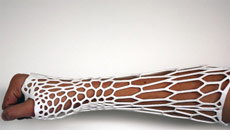
    In what could revolutionise plaster cast technology, a Turkish design student has unveiled a slick 3D-printed cast with ventilation holes that reduces healing time by around 40 percent than currently used plaster casts.

    Now, 3D-printed plaster cast to heal wound faster