Wednesday, December 24, 2025
ADVT 
Health

Eat Broccoli To Keep Diabetes In Check

Darpan News Desk IANS, 16 Jun, 2017 11:22 PM
    Here's another reason to consume broccoli, as researchers have identified a new anti-diabetic substance, richly occurring in broccoli, which can significantly lower the blood sugar levels.
     
    The findings indicated that blood sugar of the animals that received sulforaphane dropped by 23 percent in four weeks.
     
    Study author Anders Rosengren from the University of Gothenburg said that there are strong indications that sulforaphane can become a valuable supplement to existing medication.
     
    The objective was to find new medications against type-2 diabetes by addressing an important disease mechanism: the liver's elevated glucose production.
     
    The classic drug metformin works by doing just that, but often causes gastric side-effects and can also not be taken when kidney function is severely reduced, which affects many with diabetes.
     
    They analysed 2,800 participants investigated and found that sulforaphane proved to have the best characteristics for the task.
     
    An antioxidant that was previously studied for the treatment of cancer and inflammatory disease, but not for diabetes was thereby identified.


    Cell experiments were followed by animal studies on rats and mice with dietary-induced diabetes.
     
    The blood sugar of the animals that received sulforaphane dropped by 23 percent in four weeks, and by 24 percent in those given metformin.
     
    Anders Rosengren explained that when sulforaphane was removed from the extract, the effect disappeared and then they also looked at the genes from the liver of the animals and saw that the 50 key genes had been changed in the right direction.
     
    A daily dose of sulforaphane is extracted from four to five kilograms of broccoli.
     
    Anders Rosengren noted that sulforaphane targets a central mechanism in Type-2 diabetesand has a mild side-effect profile. As functional food, it can reach the patients faster than a medication, and it is also an interesting concept from a diabetes perspective, where diet is central.
     
     
    The study is published in the journal Science Translational Medicine.
    MORE Health ARTICLES

    Ebola Is Found In Doctor's Eye Months After It Was Gone From Blood; No Virus In Tears Though

    Ebola Is Found In Doctor's Eye Months After It Was Gone From Blood; No Virus In Tears Though
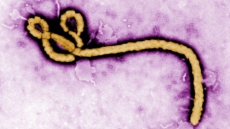
    For the first time, Ebola has been discovered inside the eyes of a patient months after the virus was gone from his blood.

    Ebola Is Found In Doctor's Eye Months After It Was Gone From Blood; No Virus In Tears Though

    Women Like Casual Sex As Men Do: Study

    Women Like Casual Sex As Men Do: Study
    If you thought men are more likely to accept a sexual invitation from a stranger than women are, you are probably wrong.

    Women Like Casual Sex As Men Do: Study

    Feel Sleepy At Work? Blame It On Depression, Obesity

    Feel Sleepy At Work? Blame It On Depression, Obesity
    If you feel tired and drowsy the whole day even after a good night's sleep, it could be due to obesity or depression, a new research has found.

    Feel Sleepy At Work? Blame It On Depression, Obesity

    Menopause Not The Sex Killer For Women

    Menopause Not The Sex Killer For Women
    A woman's sex drive isn't as affected by menopause as we once thought, says a new research.

    Menopause Not The Sex Killer For Women

    Stretch Marks Worrisome Issue For New, Expecting Mothers: Survey

    According to the Yummy Mummy Survey by Nielsen, one of the most worrisome issues with respect to their physical appearance as stated by 84 percent of new and expecting mothers are stretch marks.

    Stretch Marks Worrisome Issue For New, Expecting Mothers: Survey

    Have A History Of Sleepwalking? If So, Your Kids Are More Likely To Do It Too

    Have A History Of Sleepwalking? If So, Your Kids Are More Likely To Do It Too
    TORONTO — Did you sleepwalk when you were a kid? Still do it occasionally? If so, chances are your children will do it too. A new study adds support to the growing belief that behaviours like sleepwalking and sleep terrors run in families.

    Have A History Of Sleepwalking? If So, Your Kids Are More Likely To Do It Too