Friday, June 5, 2026
ADVT 
Health

Eat Grapes To Protect Your Teeth From Decay

Darpan News Desk IANS, 16 Jun, 2017 11:12 PM
    Eating grapes can protect your teeth from decaying as a recent study suggests a natural compound found in grapes can strengthen teeth and boost the strength of fillings.
     
    Scientists from the University of Illinois at Chicago College of Dentistry say this discovery could stop people from losing teeth as the grape seed extract - a byproduct of the wine making industry which can be purchased from health food shops - has long been linked to health benefits such as improved heart function and better circulation.
     
    Now the substance could reduce tooth extractions by increasing the longevity of composite-resin fillings - or tooth-coloured fillings - which typically last only five to seven years.
     
    The results suggested that the extract has been found to toughen dentin, the tissue that makes up the bulk of the tooth, which lies beneath the hard external enamel, reports the Mail Online.
     
    This means that when teeth are damaged, the remaining structure can be made stronger to bond with materials used in fillings.
     
     
    It could spell good news for patients who opt for resin fillings because they are more aesthetically pleasing, even though they are not as tough amalgam fillings, which last 10 to 15 years or more.
     
    A researcher Dr Ana Bedran-Russo said that when fillings fail, decay forms around it and the seal is lost. The team wants to reinforce the interface, which will make the resin bond better to the dentin.
     
    Tooth decay can occur when acid is produced from plaque, which builds up on your teeth.
     
    If the plaque is allowed to build up, the acid can begin to break down the surface of your tooth, causing holes known as cavities.
     
    The cavity begins to eat away at the second level of tooth material that lies beneath the enamel: the dentin.
     
    Interlocking the resin and collagen-rich dentin provides better adhesion and does not rely on moisture, the researchers stated.
     
    The study appeared in the journal of Dental Research.

    MORE Health ARTICLES

    Befriend a cyber buddy to stay motivated

    Befriend a cyber buddy to stay motivated
    Although a human partner is a better motivator during exercise, a software-generated cyber partner can also be effective in making you work a little extra, research reveals.

    Befriend a cyber buddy to stay motivated

    New method to treat cocaine addiction effectively

    New method to treat cocaine addiction effectively
    There is hardly any effective medications for cocaine addiction, but researchers have now discovered a new compound that can halt cocaine addiction, raising hope for new treatment for drug addicts.

    New method to treat cocaine addiction effectively

    How bariatric surgery can help control diabetes

    How bariatric surgery can help control diabetes
    That bariatric surgery, or obesity surgery, leads to weight loss is well known, but researchers have now identified the mechanism why obesity surgery also leave positive effects on diabetes and heart diseases.

    How bariatric surgery can help control diabetes

    Now, 3D-printed plaster cast to heal wound faster

    Now, 3D-printed plaster cast to heal wound faster
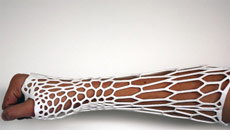
    In what could revolutionise plaster cast technology, a Turkish design student has unveiled a slick 3D-printed cast with ventilation holes that reduces healing time by around 40 percent than currently used plaster casts.

    Now, 3D-printed plaster cast to heal wound faster

    Smart cup that delivers coffee, news too!

    Smart cup that delivers coffee, news too!
    Reading the morning newspaper while sipping a cup of coffee is set to become an even smoother experience as a Finnish coffee roastery company has developed a smart coffee cup that could also display an e-paper.

    Smart cup that delivers coffee, news too!

    An 'upside-down planet' discovered

    An 'upside-down planet' discovered
    Like so many interesting discoveries, this one happened largely by accident. An astronomer has discovered an ‘upside-down planet’ that reveals new method for studying binary star systems.

    An 'upside-down planet' discovered