Friday, December 26, 2025
ADVT 
Health

Eating 'On The Go' Could Make You Fat

Darpan News Desk IANS, 21 Aug, 2015 01:16 PM
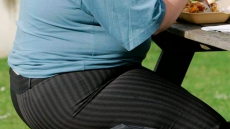
    Dieters who eat while performing other activities such as walking or watching television may increase their food intake later in the day which could lead to weight gain and obesity, says a new study.
     
    "Eating on the go may make dieters overeat later on in the day," said lead study author Jane Ogden, professor at University of Surrey in England.
     
    The study also showed that eating while walking around triggered more overeating compared to eating during other forms of distraction such as watching TV or having a conversation with a friend.
     
    "This may be because walking is a powerful form of distraction which disrupts our ability to process the impact eating has on our hunger. Or it may be because walking, even just around a corridor, can be regarded as a form of exercise which justifies overeating later on as a form of reward," Ogden noted.
     
    The team examined 60 women who were either dieters or non-dieters and gave them all a cereal bar to eat under three different conditions. 
     
    The first group was asked to watch a five-minute clip of the sitcom 'Friends' while eating. 
     
    The second group was asked to walk around the corridor while consuming the cereal bar, and the third group was simply asked to sit opposite a friend and have a conversation. 
     
    After the experiment, participants completed a taste test involving four different bowls of snacks, including chocolate, carrot sticks, grapes and crisps.
     
    The results showed that dieters ate more snacks at the taste test if they had eaten the initial cereal bar while walking around and specifically they ate five times more chocolate.
     
    "Even though walking had the most impact, any form of distraction can lead to weight gain,” Ogden noted.
     
    "When we do not fully concentrate on our meals and the process of taking in food, we fall into a trap of mindless eating where we do not track or recognise the food that has just been consumed," Ogden pointed out.
     
    The study was published in the Journal of Health Psychology.

    MORE Health ARTICLES

    Walking speed may detect Alzheimer's risk

    Walking speed may detect Alzheimer's risk
    How fast people walk and whether they have memory complaints can help predict dementia early, researchers have found....

    Walking speed may detect Alzheimer's risk

    Night lights can wake up breast cancer cells

    Night lights can wake up breast cancer cells
    Sleeping at night with the lights on can not only add to your energy consumption, but also wake up breast cancer cells, a study suggests....

    Night lights can wake up breast cancer cells

    Virus linked to obesity and diabetes found

    Virus linked to obesity and diabetes found
    Biologists have discovered an extremely widespread virus that could be as old as humans and could play a major role in obesity and diabetes...

    Virus linked to obesity and diabetes found

    Men in shift work at higher type 2 diabetes risk: Study

    Men in shift work at higher type 2 diabetes risk: Study
    The reasons for this finding are not clear, say the authors, but suggest that men working shift patterns might need to pay more attention to the possible health...

    Men in shift work at higher type 2 diabetes risk: Study

    How malaria parasite resists key trial drug

    How malaria parasite resists key trial drug
    Researchers have uncovered a way the malaria parasite becomes resistant to a key clinical trial drug....

    How malaria parasite resists key trial drug

    Immune response to injury may damage brain: Study

    Immune response to injury may damage brain: Study
    Can our immune system trigger memory impairment and cognitive dysfunction leading to chronic neurological diseases? Researchers at Cleveland Clinic in Ohio believe so....

    Immune response to injury may damage brain: Study