Monday, December 29, 2025
ADVT 
Health

Eating 'On The Go' Could Make You Fat

Darpan News Desk IANS, 21 Aug, 2015 01:16 PM
    Dieters who eat while performing other activities such as walking or watching television may increase their food intake later in the day which could lead to weight gain and obesity, says a new study.
     
    "Eating on the go may make dieters overeat later on in the day," said lead study author Jane Ogden, professor at University of Surrey in England.
     
    The study also showed that eating while walking around triggered more overeating compared to eating during other forms of distraction such as watching TV or having a conversation with a friend.
     
    "This may be because walking is a powerful form of distraction which disrupts our ability to process the impact eating has on our hunger. Or it may be because walking, even just around a corridor, can be regarded as a form of exercise which justifies overeating later on as a form of reward," Ogden noted.
     
    The team examined 60 women who were either dieters or non-dieters and gave them all a cereal bar to eat under three different conditions. 
     
    The first group was asked to watch a five-minute clip of the sitcom 'Friends' while eating. 
     
    The second group was asked to walk around the corridor while consuming the cereal bar, and the third group was simply asked to sit opposite a friend and have a conversation. 
     
    After the experiment, participants completed a taste test involving four different bowls of snacks, including chocolate, carrot sticks, grapes and crisps.
     
    The results showed that dieters ate more snacks at the taste test if they had eaten the initial cereal bar while walking around and specifically they ate five times more chocolate.
     
    "Even though walking had the most impact, any form of distraction can lead to weight gain,” Ogden noted.
     
    "When we do not fully concentrate on our meals and the process of taking in food, we fall into a trap of mindless eating where we do not track or recognise the food that has just been consumed," Ogden pointed out.
     
    The study was published in the Journal of Health Psychology.
    MORE Health ARTICLES

    Build super muscles with soy-dairy protein

    Build super muscles with soy-dairy protein
    Not happy with gym results on your muscles? Try a blend of soy and dairy proteins after resistance exercises as this has now been touted as the best way to build muscle mass.

    Build super muscles with soy-dairy protein

    'Love hormone' bonds animals like humans

    'Love hormone' bonds animals like humans
    And you thought you had a patent on 'love hormone' when it comes to showing affection! Dogs too have oxytocin and release it in a good quantity when in love or looking for bonding.

    'Love hormone' bonds animals like humans

    Can you believe it? Metabolism existed even before origin of life, reveales study

    Can you believe it? Metabolism existed even before origin of life, reveales study
    The mystery behind how the first organisms on earth could have become metabolically active has been unlocked.

    Can you believe it? Metabolism existed even before origin of life, reveales study

    Fly's genome study offers hope for sleeping sickness

    Fly's genome study offers hope for sleeping sickness
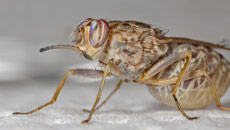
    With genome decoding of tsetse fly that causes the potentially fatal sleeping sickness disease, scientists have discovered new clues to the diet, vision and reproductive strategies of the insect.

    Fly's genome study offers hope for sleeping sickness

    Technology to catch dozing drivers on the go

    Technology to catch dozing drivers on the go
    Long rides at night can now become a lot more pleasant and safe if you listen to researchers who have developed an inexpensive and easier way to find out when the person behind the wheel is about to nod off.

    Technology to catch dozing drivers on the go

    Astronauts may face attention deficit risks

    Astronauts may face attention deficit risks
    Astronauts who are radiation-sensitive need to take extra care to protect their brains as they may face risks of attention deficit and slower reaction times, a study suggests.

    Astronauts may face attention deficit risks