Tuesday, December 23, 2025
ADVT 
Health

Ebola Is Found In Doctor's Eye Months After It Was Gone From Blood; No Virus In Tears Though

Darpan News Desk The Canadian Press, 09 May, 2015 11:10 PM
    For the first time, Ebola has been discovered inside the eyes of a patient months after the virus was gone from his blood.
     
    Ebola has infected more than 26,000 people since December 2013 in West Africa. Some survivors have reported eye problems but how often they occur isn't known. The virus also is thought to be able to persist in semen for several months.
     
    The new report concerns Dr. Ian Crozier, a 43-year-old American physician diagnosed with Ebola in September while working with the World Health Organization in Sierra Leone.
     
    He was treated at Emory University Hospital's special Ebola unit in Atlanta and released in October when Ebola was no longer detected in his blood. Two months later, he developed an inflammation and very high blood pressure in one eye, which causes swelling and potentially serious vision problems.
     
    He returned to Emory, where ophthalmologist Dr. Steven Yeh drained some of the fluid and had it tested for Ebola. It contained the virus but tears and tissue around the outside of his eye did not.
     
    That suggests that casual contact with an Ebola survivor poses no public health risk, but shows that survivors need to be monitored for the eye problem, Yeh said.
     
    Crozier has not fully recovered his vision but continues to improve, Yeh said.
     
    Dr. Jay Varkey, an Emory infectious disease specialist, said those involved in Crozier's care wore recommended protective gear and monitored themselves for Ebola symptoms for several weeks afterward as a precaution.
     
    Doctors discussed the case at an Association for Research in Vision and Ophthalmology conference in Denver on Thursday, and the New England Journal of Medicine published their account online.
     
    Earlier Thursday, the World Health Organization said that the number of Ebola cases reported in Guinea and Sierra Leone last week dropped to its lowest total this year. And Liberia, which has had the most deaths in the outbreak — more than 4,700 — plans on Saturday to declare the outbreak over in that country unless new cases are discovered.


    MORE Health ARTICLES

    Technology to catch dozing drivers on the go

    Technology to catch dozing drivers on the go
    Long rides at night can now become a lot more pleasant and safe if you listen to researchers who have developed an inexpensive and easier way to find out when the person behind the wheel is about to nod off.

    Technology to catch dozing drivers on the go

    Astronauts may face attention deficit risks

    Astronauts may face attention deficit risks
    Astronauts who are radiation-sensitive need to take extra care to protect their brains as they may face risks of attention deficit and slower reaction times, a study suggests.

    Astronauts may face attention deficit risks

    Befriend a cyber buddy to stay motivated

    Befriend a cyber buddy to stay motivated
    Although a human partner is a better motivator during exercise, a software-generated cyber partner can also be effective in making you work a little extra, research reveals.

    Befriend a cyber buddy to stay motivated

    New method to treat cocaine addiction effectively

    New method to treat cocaine addiction effectively
    There is hardly any effective medications for cocaine addiction, but researchers have now discovered a new compound that can halt cocaine addiction, raising hope for new treatment for drug addicts.

    New method to treat cocaine addiction effectively

    How bariatric surgery can help control diabetes

    How bariatric surgery can help control diabetes
    That bariatric surgery, or obesity surgery, leads to weight loss is well known, but researchers have now identified the mechanism why obesity surgery also leave positive effects on diabetes and heart diseases.

    How bariatric surgery can help control diabetes

    Now, 3D-printed plaster cast to heal wound faster

    Now, 3D-printed plaster cast to heal wound faster
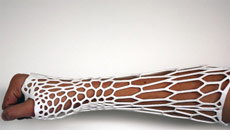
    In what could revolutionise plaster cast technology, a Turkish design student has unveiled a slick 3D-printed cast with ventilation holes that reduces healing time by around 40 percent than currently used plaster casts.

    Now, 3D-printed plaster cast to heal wound faster