Saturday, December 20, 2025
ADVT 
Health

Ebola Is Found In Doctor's Eye Months After It Was Gone From Blood; No Virus In Tears Though

Darpan News Desk The Canadian Press, 09 May, 2015 11:10 PM
    For the first time, Ebola has been discovered inside the eyes of a patient months after the virus was gone from his blood.
     
    Ebola has infected more than 26,000 people since December 2013 in West Africa. Some survivors have reported eye problems but how often they occur isn't known. The virus also is thought to be able to persist in semen for several months.
     
    The new report concerns Dr. Ian Crozier, a 43-year-old American physician diagnosed with Ebola in September while working with the World Health Organization in Sierra Leone.
     
    He was treated at Emory University Hospital's special Ebola unit in Atlanta and released in October when Ebola was no longer detected in his blood. Two months later, he developed an inflammation and very high blood pressure in one eye, which causes swelling and potentially serious vision problems.
     
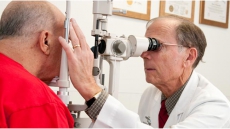
    He returned to Emory, where ophthalmologist Dr. Steven Yeh drained some of the fluid and had it tested for Ebola. It contained the virus but tears and tissue around the outside of his eye did not.
     
    That suggests that casual contact with an Ebola survivor poses no public health risk, but shows that survivors need to be monitored for the eye problem, Yeh said.
     
    Crozier has not fully recovered his vision but continues to improve, Yeh said.
     
    Dr. Jay Varkey, an Emory infectious disease specialist, said those involved in Crozier's care wore recommended protective gear and monitored themselves for Ebola symptoms for several weeks afterward as a precaution.
     
    Doctors discussed the case at an Association for Research in Vision and Ophthalmology conference in Denver on Thursday, and the New England Journal of Medicine published their account online.
     
    Earlier Thursday, the World Health Organization said that the number of Ebola cases reported in Guinea and Sierra Leone last week dropped to its lowest total this year. And Liberia, which has had the most deaths in the outbreak — more than 4,700 — plans on Saturday to declare the outbreak over in that country unless new cases are discovered.


    MORE Health ARTICLES

    New method can detect epilepsy symptoms early in kids

    New method can detect epilepsy symptoms early in kids
    Using an electroencephalography (EEG) analytical method, a team of doctors and scientists in Taiwan has successfully developed a tool to detect..

    New method can detect epilepsy symptoms early in kids

    Vitamin B1 deficiency can damage your brain

    Vitamin B1 deficiency can damage your brain
    Include more vitamin B1-rich food in your diet as neurologists have underlined that deficiency of a single vitamin B1 (or thiamine) can cause a potentially...

    Vitamin B1 deficiency can damage your brain

    Cure for glaucoma in sight

    Cure for glaucoma in sight
    A cure is now in sight for the dangerous eye disease glaucoma, which is a leading cause of irreversible blindness, says a new study....

    Cure for glaucoma in sight

    Sleeping brain active even when you doze off

    Sleeping brain active even when you doze off
    Have you ever performed calculations or classified words before falling asleep and then experienced continuing those calculations during your snooze? Well, salute your wonder brain....

    Sleeping brain active even when you doze off

    Even Fluoride-rich Toothpaste Can't Kill Bacteria

    Even Fluoride-rich Toothpaste Can't Kill Bacteria
    Know why your toothpaste is not able to fight bad breath or tooth decay? Blame it on the bacteria itself.

    Even Fluoride-rich Toothpaste Can't Kill Bacteria

    AB blood type may increase dementia risk

    AB blood type may increase dementia risk
    "Our study looks at blood type and risk of cognitive impairment," said study author Mary Cushman from the University of Vermont, College of Medicine in Burlington....

    AB blood type may increase dementia risk