Sunday, February 8, 2026
ADVT 
Health

Ebola virus detected in semen three months after symptoms end

Darpan News Desk IANS, 28 Nov, 2014 12:44 PM
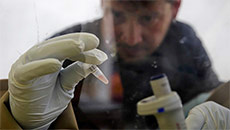
    The World Health Organisation (WHO) warned Friday that the semen of men recovering from Ebola can contain the deadly virus up to three months after the symptoms disappear.
     
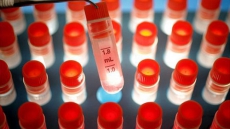
    Four studies on the persistence of Ebola virus in the seminal fluid of 43 patients concluded that the virus was present in the semen of three men, 40, 61 and 82 days after recovering from the haemorrhaegic fever caused by the virus.
     
    "Because of the potential to transmit the virus sexually during this time, they should maintain good personal hygiene after masturbation, and either abstain from sex (including oral sex) for three months after onset of symptoms," advised WHO.
     
    If abstinence is not possible, the organisation continued, the patient should use condoms.
     
    The studies on which these recommendations are based were not made during the current Ebola outbreak centered in West Africa, but on past epidemics that occurred in Uganda and the Democratic Republic of Congo.
     
    WHO does not recommend that convalescent men who have tested negative for the virus in their blood be kept in isolation.
     
    The Ebola virus is found in body fluids such as blood, vomit, faeces, saliva, urine, tears and seminal and vaginal fluids.
     
    WHO went on to caution that although the evidence is limited, it is clear that semen is a potential source of infection and can transmit the virus.
    MORE Health ARTICLES

    New blood test may offer personalised ovarian cancer treatment

    New blood test may offer personalised ovarian cancer treatment
    Researchers have discovered that a combination of proteins is the key to ovarian cancer treatment, leading them to come up with a blood test that...

    New blood test may offer personalised ovarian cancer treatment

    Plant cells may help treat hemophilia

    Plant cells may help treat hemophilia
    Treating hemophilia, a rare bleeding disorder in which the blood does not clot normally, could be a lot cheaper and much safer as researchers...

    Plant cells may help treat hemophilia

    Safety data expected in Nov., Ebola vaccines may be used before end of 2014

    Safety data expected in Nov., Ebola vaccines may be used before end of 2014
    TORONTO - The World Health Organization says experimental Ebola vaccines may be ready to be used before the end of 2014.

    Safety data expected in Nov., Ebola vaccines may be used before end of 2014

    Wear sunglasses to avoid common eye disease

    Wear sunglasses to avoid common eye disease
    If your job leads to spending most of the time outdoors, do not forget to wear sunglasses as it can save you from developing a common eye disease.

    Wear sunglasses to avoid common eye disease

    No link between wearing bra and breast cancer: Study

    No link between wearing bra and breast cancer: Study
    There is no association between bra wearing and increased breast cancer risk among post-menopausal women, according to new research.

    No link between wearing bra and breast cancer: Study

    Urgently Needed: South Asian Stem Cell Donors for Cancer Patients

    Urgently Needed: South Asian Stem Cell Donors for Cancer Patients
    In a personal request Ms. Aman Bindra contacted us to spread her message to all the South Asian Stem Cell Donors who could help her with a personal situation.

    Urgently Needed: South Asian Stem Cell Donors for Cancer Patients