Monday, April 6, 2026
ADVT 
Health

Ebola's Evolutionary Ancient Roots Discovered

Darpan News Desk Darpan, 24 Oct, 2014 11:49 PM
    A study discovered that filoviruses - a family to which Ebola and its similarly lethal relative Marburg belong - are at least 16-23 million years old.
     
    Filoviruses were likely to have existed in the Miocene Epoch and at that time, the evolutionary lines leading to Ebola and Marburg had already diverged, it noted.
     
    "Filoviruses are far more ancient than previously thought. These things have been interacting with mammals for a long time, several million years," said lead researcher Derek Taylor, professor of biological sciences at the University at Buffalo in the US.
     
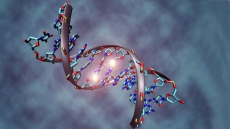
    In the study, Taylor and co-author Jeremy Bruenn reported finding remnants of filovirus-like genes in various rodents.
     
    One fossil gene, called VP35, appeared in the same spot in the genomes of four different rodent species: two hamsters and two voles.
     
    This meant the material was likely to have been acquired in or before the Miocene Epoch, prior to when these rodents evolved into distinct species some 16-23 million years ago.
     
    "These rodents have billions of base pairs in their genomes, so the odds of a viral gene inserting itself at the same position in different species at different times are very small. It is likely that the insertion was present in the common ancestor of these rodents," Taylor added.
     
    The genetic material in the VP35 fossil was more closely related to Ebola than to Marburg, indicating that the lines leading to these viruses had already begun diverging from each other in the Miocene.
     
    The first Ebola outbreak in humans occurred in 1976 and scientists still know little about the virus' history.
     
    The research was published in the journal PeerJ.
    MORE Health ARTICLES

    Scientists rewrite code of life with 'alien' DNA

    Scientists rewrite code of life with 'alien' DNA
    In a major breakthrough that could re-write the history of life on earth, scientists have successfully added an alien pair of DNA "letters" (or bases) to create the first "semi-synthetic" bacterium.

    Scientists rewrite code of life with 'alien' DNA

    Now, a DNA tool to spot cancer

    Now, a DNA tool to spot cancer
    Detecting cancer could soon become a lot easier as scientists have used DNA to develop a tool that detects and reacts to chemical changes caused by cancer cells.

    Now, a DNA tool to spot cancer

    What you were waiting for! A device that detects pee in pool

    What you were waiting for! A device that detects pee in pool
    Those who have a habit of peeing in a swimming pool, beware. Here comes a device glows green the moment it detects traces of human waste in water.

    What you were waiting for! A device that detects pee in pool

    Do humans have spiders' genes?

    Do humans have spiders' genes?
    Not only the spiderman, even you may share certain genomic similarities with spiders, a study that for the first time sequenced the genome of a spider has revealed.

    Do humans have spiders' genes?

    Anger a better motivator for volunteers than sympathy?

    Anger a better motivator for volunteers than sympathy?
    Angry people do not always raise a ruckus; they may also bring about positive changes to society with a new study showing that anger may be more effective at motivating people to volunteer than other motives.

    Anger a better motivator for volunteers than sympathy?

    Impulsive people at greater risk of food addiction

    Impulsive people at greater risk of food addiction
    Impulsive people are at greater risks of food and drug addition as impulsivity is a result of cellular activities in the part of the brain involved with reward and not a result of dysfunctional eating behaviour, a study indicated.

    Impulsive people at greater risk of food addiction