Sunday, December 28, 2025
ADVT 
Health

E-cigarettes less addictive than tobacco cigarettes: Study

Darpan News Desk IANS, 10 Dec, 2014 11:36 AM
    E-cigarettes are less addictive than tobacco cigarettes, finds a research, adding weight to the argument that vaping could help quit smoking.
     
    "We found that e-cigarettes appear to be less addictive than tobacco cigarettes in a large sample of long-term users," said Jonathan Foulds, professor of public health sciences and psychiatry at Pennsylvania State University College of Medicine.
     
    The popularity of e-cigarettes (e-cigs), which typically deliver nicotine, propylene glycol, glycerin and flavourings through inhaled vapour, has increased in the past five years.
     
    While the long-term effects on health and nicotine dependence are unknown, Foulds pointed out, "We might actually need e-cigarettes that are better at delivering nicotine because that is what is more likely to help people quit."
     
    While carrying out the study, the researchers developed an online survey, including questions designed to assess previous dependence on cigarettes and almost identical questions to assess current dependence on e-cigs.
     
    More than 3,500 current users of e-cigs who were former tobacco cigarette smokers participated in the survey.
     
    The researchers found that people with all the characteristics of a more dependent e-cig user still had a lower e-cig dependence score than their tobacco cigarette dependence score.
     
    "We think this is because they are getting less nicotine from the e-cigs than they were getting from tobacco cigarettes," Foulds explained.
     
    "Any common sense analysis says that e-cigs are much less toxic. And our paper shows that they appear to be much less addictive, as well," he added.
     
    The study appeared in the journal Nicotine & Tobacco Research.

    MORE Health ARTICLES

    Technology to catch dozing drivers on the go

    Technology to catch dozing drivers on the go
    Long rides at night can now become a lot more pleasant and safe if you listen to researchers who have developed an inexpensive and easier way to find out when the person behind the wheel is about to nod off.

    Technology to catch dozing drivers on the go

    Astronauts may face attention deficit risks

    Astronauts may face attention deficit risks
    Astronauts who are radiation-sensitive need to take extra care to protect their brains as they may face risks of attention deficit and slower reaction times, a study suggests.

    Astronauts may face attention deficit risks

    Befriend a cyber buddy to stay motivated

    Befriend a cyber buddy to stay motivated
    Although a human partner is a better motivator during exercise, a software-generated cyber partner can also be effective in making you work a little extra, research reveals.

    Befriend a cyber buddy to stay motivated

    New method to treat cocaine addiction effectively

    New method to treat cocaine addiction effectively
    There is hardly any effective medications for cocaine addiction, but researchers have now discovered a new compound that can halt cocaine addiction, raising hope for new treatment for drug addicts.

    New method to treat cocaine addiction effectively

    How bariatric surgery can help control diabetes

    How bariatric surgery can help control diabetes
    That bariatric surgery, or obesity surgery, leads to weight loss is well known, but researchers have now identified the mechanism why obesity surgery also leave positive effects on diabetes and heart diseases.

    How bariatric surgery can help control diabetes

    Now, 3D-printed plaster cast to heal wound faster

    Now, 3D-printed plaster cast to heal wound faster
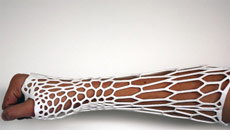
    In what could revolutionise plaster cast technology, a Turkish design student has unveiled a slick 3D-printed cast with ventilation holes that reduces healing time by around 40 percent than currently used plaster casts.

    Now, 3D-printed plaster cast to heal wound faster