Thursday, February 12, 2026
ADVT 
Health

Electric currents may boost memory

Darpan News Desk Darpan, 29 Aug, 2014 10:34 AM
  • Electric currents may boost memory
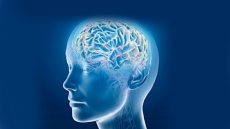
Electric currents could be the key to treating memory impairments caused by conditions such as stroke, early-stage Alzheimer's disease, traumatic brain injury, cardiac arrest and the memory problems that occur in healthy ageing.
 
Researchers have found that stimulating a particular region in the brain via non-invasive delivery of electrical current using magnetic pulses, called Transcranial Magnetic Stimulation (TMS), improves memory.
 
"We show for the first time that you can specifically change memory functions of the brain in adults without surgery or drugs, which have not proven effective," said senior author Joel Voss, assistant professor of medical social sciences at Northwestern University Feinberg School of Medicine in the US.
 
"This non-invasive stimulation improves the ability to learn new things. It has tremendous potential for treating memory disorders," Voss added.
 
It is not possible to directly stimulate the hippocampus (a key memory structure) with TMS because it is too deep in the brain for the magnetic fields to penetrate.
 
So, using an MRI scan, the researchers identified a superficial brain region a mere centimetre from the surface of the skull with high connectivity to the hippocampus.
 
The researchers wanted to see if directing the stimulation to this spot would in turn stimulate the hippocampus. It did.
 
"I was astonished to see that it worked so specifically," Voss said.
 
When TMS was used to stimulate this spot, regions in the brain involved with the hippocampus became more synchronised with each other.
 
The more those regions worked together due to the stimulation, the better people were able to learn new information.
 
The study involving 16 healthy adults ages 21 to 40 will be published in the journal Science.

MORE Health ARTICLES

Revealed: How Chinese have faster eye movement

Revealed: How Chinese have faster eye movement
Ever wondered how quickly Chinese people move their eyes? It has nothing to do with the neurological behaviour or culture in people of Chinese origin.

Revealed: How Chinese have faster eye movement

Decoded: How You Decide Who Is More Popular

Decoded: How You Decide Who Is More Popular
Your brain knows for sure who attracts more eyeballs in your own circle as a new research has found how our brains recognise popular people. People track popularity largely through the brain region involved in anticipating rewards.

Decoded: How You Decide Who Is More Popular

How watching movies synchronises viewers' brains

How watching movies synchronises viewers' brains
Do you know that while watching a movie, your brain reacts to it immediately in a way similar to other people's brains? Researchers have succeeded in developing a method fast enough to observe immediate changes in the function of the brain even when watching a movie. 

How watching movies synchronises viewers' brains

Twitter, Facebook driving couples to break relationships!

Twitter, Facebook driving couples to break relationships!
Arguments over social media platforms among romantic partners are damaging relationships, ending in negative outcomes like emotional and physical cheating, breakup and divorce, a significant research reveals.

Twitter, Facebook driving couples to break relationships!

Have green tea to boost working memory

Have green tea to boost working memory
 Have another cup of green tea after reading this, especially if you are in office. Researchers at University of Basel in Switzerland have found that green tea extract enhances the cognitive functions - in particular the working memory.

Have green tea to boost working memory

First Mars settlers to devour grasshoppers?

First Mars settlers to devour grasshoppers?
Even as scientists explore possibilities of human settlement on the red planet, speculations are now on as to what could be the diet of the first human settlers in Mars.

First Mars settlers to devour grasshoppers?