Tuesday, December 16, 2025
ADVT 
Health

Even Fluoride-rich Toothpaste Can't Kill Bacteria

Darpan News Desk Darpan, 12 Sep, 2014 12:52 PM
    Know why your toothpaste is not able to fight bad breath or tooth decay? Blame it on the bacteria itself.
     
    According to new research, bacteria has an in-built mechanism to resist fluoride toxicity.
     
    Although most animal cells are protected from direct exposure to fluoride, this toxic element is a serious threat to single-celled organisms like bacteria and yeast.
     
    As a result, their plasma membranes carry two different types of proteins to help rid the cell of unwanted fluoride.
     
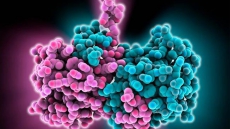
    "The fluoride-specific 'Fluc' ion channels present in the bacterial cell membrane are the key," said Christopher Miller from the Brandeis University in Massachusetts.
     
    Miller and his team looked at "Fluc" channels to find how these passive channels help protect bacteria from fluoride.
     
    The authors found that fluoride accumulates in E coli lacking "Fluc" when the external environment is acidic.
     
    In such acidic environments, fluoride enters the cell in the form of HF (hydrofluoric acid) -- which easily permeates the membrane -- and breaks down in the cell's lower acidity.
     
    "Fluc provides a means of escape for the highly charged fluoride ions," Miller noticed.
     
    They also found that bacteria proliferation was stalled by high fluoride exposure.
     
    Targeting "Fluc" channels with antibiotics could be an effective way to slow bacterial growth, researchers concluded.
     
    The study appeared in the Journal of General Physiology.
    MORE Health ARTICLES

    Can Ebola strike India?

    Can Ebola strike India?
    There are about 500 Indians in Guinea, 3,000 in Liberia and 1,200 in Sierra Leone, from where the maximum cases have been reported. Nigeria has a much...

    Can Ebola strike India?

    Indian scientists find a 'wonder herb' in the high Himalayas

    Indian scientists find a 'wonder herb' in the high Himalayas
    In the high hostile peaks of the Himalayas where sustaining life is a challenge in itself, Indian scientists say they have found a "wonder herb" which can regulate...

    Indian scientists find a 'wonder herb' in the high Himalayas

    Robotic walking stick for visually impaired

    Robotic walking stick for visually impaired
    In a first, engineers have designed a robotic walking stick for the visually impaired that can detect the user's immediate path and store localised geographical information...

    Robotic walking stick for visually impaired

    Genes may influence hangover chances

    Genes may influence hangover chances
    According to new research from University of Missouri-Columbia, genetic factors accounted for 45 percent of the difference in hangover frequency in women and 40 percent in men...

    Genes may influence hangover chances

    Green tea can protect spinal cord neurons

    Green tea can protect spinal cord neurons
    Chinese researchers have found evidence that polyphenols can protect spinal cord neurons against oxidative stress and can reduce free radical damage....

    Green tea can protect spinal cord neurons

    Serotonin can reduce sensitivity to pain

    Serotonin can reduce sensitivity to pain
    Researchers at Portugal's Champalimaud Foundation said Friday that the molecule of serotonin in the organism can diminish sensitivity to pain...

    Serotonin can reduce sensitivity to pain