Monday, December 22, 2025
ADVT 
Health

Even Fluoride-rich Toothpaste Can't Kill Bacteria

Darpan News Desk Darpan, 12 Sep, 2014 12:52 PM
    Know why your toothpaste is not able to fight bad breath or tooth decay? Blame it on the bacteria itself.
     
    According to new research, bacteria has an in-built mechanism to resist fluoride toxicity.
     
    Although most animal cells are protected from direct exposure to fluoride, this toxic element is a serious threat to single-celled organisms like bacteria and yeast.
     
    As a result, their plasma membranes carry two different types of proteins to help rid the cell of unwanted fluoride.
     
    "The fluoride-specific 'Fluc' ion channels present in the bacterial cell membrane are the key," said Christopher Miller from the Brandeis University in Massachusetts.
     
    Miller and his team looked at "Fluc" channels to find how these passive channels help protect bacteria from fluoride.
     
    The authors found that fluoride accumulates in E coli lacking "Fluc" when the external environment is acidic.
     
    In such acidic environments, fluoride enters the cell in the form of HF (hydrofluoric acid) -- which easily permeates the membrane -- and breaks down in the cell's lower acidity.
     
    "Fluc provides a means of escape for the highly charged fluoride ions," Miller noticed.
     
    They also found that bacteria proliferation was stalled by high fluoride exposure.
     
    Targeting "Fluc" channels with antibiotics could be an effective way to slow bacterial growth, researchers concluded.
     
    The study appeared in the Journal of General Physiology.

    MORE Health ARTICLES

    How bariatric surgery can help control diabetes

    How bariatric surgery can help control diabetes
    That bariatric surgery, or obesity surgery, leads to weight loss is well known, but researchers have now identified the mechanism why obesity surgery also leave positive effects on diabetes and heart diseases.

    How bariatric surgery can help control diabetes

    Now, 3D-printed plaster cast to heal wound faster

    Now, 3D-printed plaster cast to heal wound faster
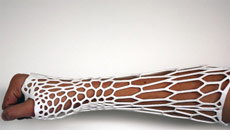
    In what could revolutionise plaster cast technology, a Turkish design student has unveiled a slick 3D-printed cast with ventilation holes that reduces healing time by around 40 percent than currently used plaster casts.

    Now, 3D-printed plaster cast to heal wound faster

    Smart cup that delivers coffee, news too!

    Smart cup that delivers coffee, news too!
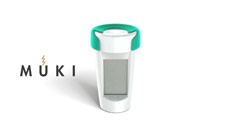
    Reading the morning newspaper while sipping a cup of coffee is set to become an even smoother experience as a Finnish coffee roastery company has developed a smart coffee cup that could also display an e-paper.

    Smart cup that delivers coffee, news too!

    An 'upside-down planet' discovered

    An 'upside-down planet' discovered
    Like so many interesting discoveries, this one happened largely by accident. An astronomer has discovered an ‘upside-down planet’ that reveals new method for studying binary star systems.

    An 'upside-down planet' discovered

    Our ancestors enjoyed summer holidays at Antartica!

    Our ancestors enjoyed summer holidays at Antartica!
    If this information stands true, the history books have to be rewritten soon. According to scientists, some parts on the coldest region on our earth - Antartica - was as warm as today's California coast.

    Our ancestors enjoyed summer holidays at Antartica!

    Garnish food with edible flowers for disease-free life!

    Garnish food with edible flowers for disease-free life!
    Forget food, try some flowers instead to increase immunity. If we go by a new research, common edible flowers in China are rich in phenolics and have excellent antioxidant capacity.

    Garnish food with edible flowers for disease-free life!