Saturday, April 4, 2026
ADVT 
Health

Even 'third-hand' smoke kills

Darpan News Desk IANS, 17 Jul, 2014 12:20 PM
  • Even 'third-hand' smoke kills
Have you finally amended your habits and stopped smoking inside the house to protect your kids from exposure to second-hand smoke? That may not be good enough!
 
Researchers have found that even 'third-hand' smoke, tobacco smoke gases and particles deposited as dust in homes, pose a potential cancer risk to non-smokers, particularly young children.
 
"The risks of tobacco exposure do not end when a cigarette is extinguished. Non-smokers, especially children, are also at risk through contact with surfaces and dust contaminated with residual smoke gases and particles, the so-called third-hand smoke," explained Jacqueline Hamilton from University of York in Britain.
 
"This risk should not be overlooked and its impact should be included in future educational programs and tobacco-related public health policies," Hamilton added.
 
The study demonstrated for the first time the widespread presence of tobacco related carcinogens in house dust, even in "smoke-free" environments.
 
Scientists collected dust samples from private homes occupied by both smokers and non-smokers. Using observations of house dust composition, they estimated the cancer risk by applying the most recent official toxicology information.
 
They found that for children aged one to six years, the cancer risks exceeded the limit recommended by the US Environmental Protection Agency (EPA) in three quarters of smokers' homes and two thirds of non-smokers' homes.
 
The study was published in the journal Environment International.

MORE Health ARTICLES

Can you believe it? Metabolism existed even before origin of life, reveales study

Can you believe it? Metabolism existed even before origin of life, reveales study
The mystery behind how the first organisms on earth could have become metabolically active has been unlocked.

Can you believe it? Metabolism existed even before origin of life, reveales study

Fly's genome study offers hope for sleeping sickness

Fly's genome study offers hope for sleeping sickness
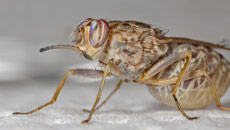
With genome decoding of tsetse fly that causes the potentially fatal sleeping sickness disease, scientists have discovered new clues to the diet, vision and reproductive strategies of the insect.

Fly's genome study offers hope for sleeping sickness

Technology to catch dozing drivers on the go

Technology to catch dozing drivers on the go
Long rides at night can now become a lot more pleasant and safe if you listen to researchers who have developed an inexpensive and easier way to find out when the person behind the wheel is about to nod off.

Technology to catch dozing drivers on the go

Astronauts may face attention deficit risks

Astronauts may face attention deficit risks
Astronauts who are radiation-sensitive need to take extra care to protect their brains as they may face risks of attention deficit and slower reaction times, a study suggests.

Astronauts may face attention deficit risks

Befriend a cyber buddy to stay motivated

Befriend a cyber buddy to stay motivated
Although a human partner is a better motivator during exercise, a software-generated cyber partner can also be effective in making you work a little extra, research reveals.

Befriend a cyber buddy to stay motivated

New method to treat cocaine addiction effectively

New method to treat cocaine addiction effectively
There is hardly any effective medications for cocaine addiction, but researchers have now discovered a new compound that can halt cocaine addiction, raising hope for new treatment for drug addicts.

New method to treat cocaine addiction effectively