Friday, May 29, 2026
ADVT 
Health

Even Though Fewer Us Teens Are Smoking, Secondhand Smoke Remains A Big Problem For Them

Darpan News Desk IANS, 11 Jan, 2016 11:40 AM
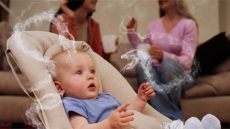
    CHICAGO — Even though fewer U.S. teens are smoking, secondhand smoke remains a big problem for them, a government study found.
     
    Nearly half of nonsmoking kids in middle school and high school encountered secondhand tobacco smoke in 2013, and rates were even higher among smokers.
     
    Earlier studies on teens and secondhand smoke in specific places, such as cars or indoors, indicate that the problem has declined in recent years but the new research suggests it's still affecting millions of kids.
     
    "These findings are concerning because the U.S. Surgeon General has concluded that there is no safe level of secondhand smoke exposure," said lead author Israel Agaku, a researcher at the Centers for Disease Control and Prevention, Secondhand smoke has been linked with several illnesses in children, including breathing problems, ear infections, bronchitis and pneumonia. In adults, it has been linked with heart disease and lung cancer.
     
     
    The study results are based on a national survey of more than 17,000 middle school and high school kids. Exposure was defined as being around tobacco smoke at least once within the past week.
     
    Nearly 1 in 4 nonsmokers who reported any exposure said they were around tobacco smoke daily. Settings included home, school, cars and public places. It's not clear how many had only brief exposure.
     
    The study was published online Monday in the journal Pediatrics.
     
    CDC data show that youth smoking has fallen steadily in recent years, reaching about 9 per cent among high schoolers in 2014. At least 26 states have smoke-free laws affecting indoor public places and worksites, and more than 80 per cent of U.S. homes have no-smoking rules.
     
    The researchers say the study results show efforts are needed to expand smoke-free zones.

    MORE Health ARTICLES

    Influenza patients in US wrongly prescribed antibiotics?

    Influenza patients in US wrongly prescribed antibiotics?
    Taking antibiotics does not help patients suffering from influenza, a viral disease, but nearly 30 percent of the flu patients who were treated during the 2012-2013 influenza season in the US may have been prescribed unnecessary antibiotics instead of antiviral therapy, says a study.

    Influenza patients in US wrongly prescribed antibiotics?

    Food strikes obese women with learning impairment

    Food strikes obese women with learning impairment
    In what could result in specific behavioural interventions to treat obesity, researchers have found that obese women are better able to identify cues that predict monetary rewards than those that predict food rewards.

    Food strikes obese women with learning impairment

    Injection to control diabetes without side effects

    Injection to control diabetes without side effects
    Dealing with diabetes could soon be a lot easier as researchers have developed an injection that can restore blood sugar levels to normal for more than two days without any side effects.

    Injection to control diabetes without side effects

    'Include men in breast cancer trials'

    'Include men in breast cancer trials'
    Men may find it hard to report anything in their breast, even if it is a lump, but the fact is breast cancer is not exclusive to women and though the proportion is small, men too can have it.

    'Include men in breast cancer trials'

    Even 'third-hand' smoke kills

    Even 'third-hand' smoke kills
    Have you finally amended your habits and stopped smoking inside the house to protect your kids from exposure to second-hand smoke? That may not be good enough!

    Even 'third-hand' smoke kills

    Why women shy away from joining science stream

    Why women shy away from joining science stream
    In what could be one of the reasons why women shy away from joining science stream, a survey reveals that many young scientists have suffered sexual harassment or sexual assault while at work in the field.

    Why women shy away from joining science stream