Tuesday, June 2, 2026
ADVT 
Health

Even Though Fewer Us Teens Are Smoking, Secondhand Smoke Remains A Big Problem For Them

Darpan News Desk IANS, 11 Jan, 2016 11:40 AM
    CHICAGO — Even though fewer U.S. teens are smoking, secondhand smoke remains a big problem for them, a government study found.
     
    Nearly half of nonsmoking kids in middle school and high school encountered secondhand tobacco smoke in 2013, and rates were even higher among smokers.
     
    Earlier studies on teens and secondhand smoke in specific places, such as cars or indoors, indicate that the problem has declined in recent years but the new research suggests it's still affecting millions of kids.
     
    "These findings are concerning because the U.S. Surgeon General has concluded that there is no safe level of secondhand smoke exposure," said lead author Israel Agaku, a researcher at the Centers for Disease Control and Prevention, Secondhand smoke has been linked with several illnesses in children, including breathing problems, ear infections, bronchitis and pneumonia. In adults, it has been linked with heart disease and lung cancer.
     
     
    The study results are based on a national survey of more than 17,000 middle school and high school kids. Exposure was defined as being around tobacco smoke at least once within the past week.
     
    Nearly 1 in 4 nonsmokers who reported any exposure said they were around tobacco smoke daily. Settings included home, school, cars and public places. It's not clear how many had only brief exposure.
     
    The study was published online Monday in the journal Pediatrics.
     
    CDC data show that youth smoking has fallen steadily in recent years, reaching about 9 per cent among high schoolers in 2014. At least 26 states have smoke-free laws affecting indoor public places and worksites, and more than 80 per cent of U.S. homes have no-smoking rules.
     
    The researchers say the study results show efforts are needed to expand smoke-free zones.

    MORE Health ARTICLES

    Forget brain, wiring in your retina detects motion first

    Forget brain, wiring in your retina detects motion first
    Making sense of at which direction and at what speed a car is moving may not be possible without the interpretation of the brain, but processing of some of these information starts right at the retinas of the eyes.

    Forget brain, wiring in your retina detects motion first

    Low testosterone levels linked to aggressive prostate cancer

    Low testosterone levels linked to aggressive prostate cancer
    Low levels of testosterone can be associated with aggressive prostate cancer and indicate worsening of the disease in men who are afflicted by it, a significant study has said.

    Low testosterone levels linked to aggressive prostate cancer

    Stay fit for strong memory power

    Stay fit for strong memory power
    One's fitness can also help achieve a strong memory power, a new study has suggested while adding that people who are out of shape struggle to retain information.

    Stay fit for strong memory power

    Revealed: How you chose your husband

    Revealed: How you chose your husband
    What sounds better: a pizza that is 90 percent fat free or a pizza with 10 percent fat? You would rush for the pizza with first message although the choice is the same. The same principle applies when you choose your mate!

    Revealed: How you chose your husband

    Guess what, your nose can be used to sniff out opposite sex

    Guess what, your nose can be used to sniff out opposite sex
    You are not aware of this at the conscious level but your nose is busy doing its job - sniffing out that feminine smell from secretions her body is oozing near you in marketplace, office or mall!

    Guess what, your nose can be used to sniff out opposite sex

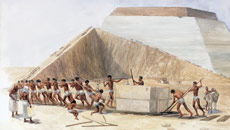
    Know how Egyptians moved giant rocks to build pyramids

    Know how Egyptians moved giant rocks to build pyramids
    It is time to rewrite history books. The mystery of how Egyptians moved huge stones to build pyramids has been unlocked, finally.

    Know how Egyptians moved giant rocks to build pyramids