Tuesday, June 2, 2026
ADVT 
Health

Even Though Fewer Us Teens Are Smoking, Secondhand Smoke Remains A Big Problem For Them

Darpan News Desk IANS, 11 Jan, 2016 11:40 AM
    CHICAGO — Even though fewer U.S. teens are smoking, secondhand smoke remains a big problem for them, a government study found.
     
    Nearly half of nonsmoking kids in middle school and high school encountered secondhand tobacco smoke in 2013, and rates were even higher among smokers.
     
    Earlier studies on teens and secondhand smoke in specific places, such as cars or indoors, indicate that the problem has declined in recent years but the new research suggests it's still affecting millions of kids.
     
    "These findings are concerning because the U.S. Surgeon General has concluded that there is no safe level of secondhand smoke exposure," said lead author Israel Agaku, a researcher at the Centers for Disease Control and Prevention, Secondhand smoke has been linked with several illnesses in children, including breathing problems, ear infections, bronchitis and pneumonia. In adults, it has been linked with heart disease and lung cancer.
     
     
    The study results are based on a national survey of more than 17,000 middle school and high school kids. Exposure was defined as being around tobacco smoke at least once within the past week.
     
    Nearly 1 in 4 nonsmokers who reported any exposure said they were around tobacco smoke daily. Settings included home, school, cars and public places. It's not clear how many had only brief exposure.
     
    The study was published online Monday in the journal Pediatrics.
     
    CDC data show that youth smoking has fallen steadily in recent years, reaching about 9 per cent among high schoolers in 2014. At least 26 states have smoke-free laws affecting indoor public places and worksites, and more than 80 per cent of U.S. homes have no-smoking rules.
     
    The researchers say the study results show efforts are needed to expand smoke-free zones.

    MORE Health ARTICLES

    Alcohol, drugs together put kids at higher driving risk

    Alcohol, drugs together put kids at higher driving risk
    Teenagers who drink alcohol and smoke marijuana together may be at increased risk for unsafe driving, a study shows.

    Alcohol, drugs together put kids at higher driving risk

    New diabetes, obesity drug: Indian-American's promising research

    New diabetes, obesity drug: Indian-American's promising research
    Two researchers at Indiana University, including an Indian-American, are leading the way towards developing a new potential non-insulin drug for diabetes and obesity, which needs to be taken only once a week.

    New diabetes, obesity drug: Indian-American's promising research

    Build super muscles with soy-dairy protein

    Build super muscles with soy-dairy protein
    Not happy with gym results on your muscles? Try a blend of soy and dairy proteins after resistance exercises as this has now been touted as the best way to build muscle mass.

    Build super muscles with soy-dairy protein

    'Love hormone' bonds animals like humans

    'Love hormone' bonds animals like humans
    And you thought you had a patent on 'love hormone' when it comes to showing affection! Dogs too have oxytocin and release it in a good quantity when in love or looking for bonding.

    'Love hormone' bonds animals like humans

    Can you believe it? Metabolism existed even before origin of life, reveales study

    Can you believe it? Metabolism existed even before origin of life, reveales study
    The mystery behind how the first organisms on earth could have become metabolically active has been unlocked.

    Can you believe it? Metabolism existed even before origin of life, reveales study

    Fly's genome study offers hope for sleeping sickness

    Fly's genome study offers hope for sleeping sickness
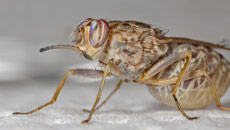
    With genome decoding of tsetse fly that causes the potentially fatal sleeping sickness disease, scientists have discovered new clues to the diet, vision and reproductive strategies of the insect.

    Fly's genome study offers hope for sleeping sickness