Thursday, March 26, 2026
ADVT 
Health

Exercise May Delay Brain Aging By 10 Years

Darpan News Desk IANS, 25 Mar, 2016 12:12 PM
  • Exercise May Delay Brain Aging By 10 Years
Want to keep a sharp memory in old age? A study has found that moderate to intense regular exercise in old age may delay brain aging by 10 years.
 
According to the study, the people who reported light to no exercise -- their brain aged 10 years more than the people who reported moderate to intense exercise. 
 
"The number of people over the age of 65 in the US is on the rise, meaning the public health burden of thinking and memory problems will likely grow," said study author Clinton B Wright from University of Miami, US.
 
"Our study showed that for older people, getting regular exercise may be protective, helping them keep their cognitive abilities longer," Wright added in the paper published in the online journal of Neurology.
 
The team looked at data on 876 people who were asked how long and how often they exercised during the two weeks prior to that date. 
 
An average of seven years later, each person was given tests of memory and thinking skills and a brain MRI and five years after that they took the memory and thinking tests again.
 
 
Of the group, 90 percent reported light exercise or no exercise, which included activities such as walking and yoga. They were placed in the low activity group. 
 
The remaining 10 percent reported moderate to high intensity exercise, which included activities such as running, aerobics, or calisthenics. They were placed in the high activity group.
 
The findings showed, low activity levels showed a greater decline over five years compared to those with high activity levels on tests of how fast they could perform simple tasks and how many words they could remember from a list. 
 
The difference was equal to that of 10 years of aging. The difference also remained after researchers adjusted for other factors that could affect brain health, such as smoking, alcohol use, high blood pressure and body mass index.
MORE Health ARTICLES

Got A Rash From Your Belt Buckle Or Ring? You Could Have Contact Dermatitis

Got A Rash From Your Belt Buckle Or Ring? You Could Have Contact Dermatitis
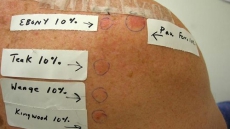
TORONTO — It could come from the metal on the back of your watch face, or your belt buckle's tendency to brush against the skin on your stomach. Or it could be the hair dye gooped onto your scalp when you go to have your roots touched up. Or the talc in the latex gloves you pull on at work.

Got A Rash From Your Belt Buckle Or Ring? You Could Have Contact Dermatitis

Kids Who Play Outdoors Solo, With Pals More Active Than Supervised Peers, Finds Canadian Study

Kids Who Play Outdoors Solo, With Pals More Active Than Supervised Peers, Finds Canadian Study
TORONTO — Children permitted to play outdoors on their own or with friends are getting more physical activity than kids who are constantly supervised, a new Canadian study suggests.

Kids Who Play Outdoors Solo, With Pals More Active Than Supervised Peers, Finds Canadian Study

Watch out! Your smartphone may be harbouring bacteria

Watch out! Your smartphone may be harbouring bacteria
A group of students from University of Surrey in Britain has revealed that the home button on your smartphone may be harbouring millions of bacteria...

Watch out! Your smartphone may be harbouring bacteria

Shun bad habits together when it comes to health

Shun bad habits together when it comes to health
If your wife finally puts on her shoes and hit the gym, it is possible that you will follow her footsteps for a healthy life together...

Shun bad habits together when it comes to health

Even with regular exercise, excessive sitting linked to disease, premature death

Even with regular exercise, excessive sitting linked to disease, premature death
TORONTO — Sitting on one's butt for a major part of the day may be deadly in the long run — even with a regimen of daily exercise, researchers say.

Even with regular exercise, excessive sitting linked to disease, premature death

Poor sleep leads to alcohol and drug addiction

Poor sleep leads to alcohol and drug addiction
Sleep difficulties and hours of sleep can predict a number of specific problems, including binge drinking, driving under the influence and risky sexual behaviour..

Poor sleep leads to alcohol and drug addiction