Infectious disease specialist Dr. Allison McGeer has lived and worked through SARS-1 in 2003, the H1N1 flu pandemic in 2009 and the COVID-19 pandemic, which began in 2020.
With the trauma of the COVID pandemic so fresh in people's minds, she understands why many are anxious about the hantavirus outbreak on board the MV Hondius cruise ship
But McGeer, who works at Mount Sinai Hospital in Toronto, says it's highly improbable that this virus will become another pandemic.
"I was losing sleep about COVID in the first week of January of 2020. I am not losing sleep about this," McGeer said Friday.
There have been eight cases, including three deaths, of Andes virus on the cruise ship. Out of the few dozen hantaviruses, which originate in rodents, that exist, the Andes virus is the only one known to spread from human to human.
Several Canadians have been told to isolate after coming into contact with infected passengers.
A couple from the Grey Bruce region of Ontario disembarked from the ship in late April before the outbreak was declared and have showed no symptoms. Four other Canadians — from Quebec, Alberta and Ontario — were not on the ship but may have come into contact with someone infected with hantavirus while flying, the federal government said.
Four more Canadians are still on the ship and will be met by consular officials when the boat docks this weekend in Granadilla, Tenerife.
Human-to-human transmission of the Andes virus is rare, even in Argentina and Chile where it's found and "they are almost exclusively household contacts and health-care workers (who treated the patient)," McGeer said.
That means the virus doesn't spread easily enough for it to be a widespread threat, experts say.
"It's not going to be the next COVID pandemic. It doesn't have the transmission capabilities at the moment," said David Safronetz, chief of special pathogens at the National Microbiology Laboratory in Winnipeg.
"To put it in perspective, this is not a situation like a common cold or an influenza virus. It does not transmit that efficiently. It takes a long time and very close contacts," he said.
Safronetz said when Andes virus does spread, it's most likely through respiratory droplets. It causes a serious illness called hantavirus pulmonary syndrome, or HPS.
McGeer said respiratory viruses like COVID and flu can also infect many more people because they are contagious even before someone realizes they're sick. People with HPS become most contagious when they are very ill.
"I think the seminal difference in terms of pandemic potential is what's called a reproductive ratio," she said, noting that many people may remember experts talking about this term throughout the peak COVID years.
The reproductive ratio, or "R number," indicates how many other people a patient with a certain virus is likely to infect.
"If that R number is above one — meaning that a single person infects more than one person on average — then human-to-human transmission is sustainable and you have a virus that is going to cause ongoing problems in humans."
COVID-19, influenza and measles all have R numbers greater than one, McGeer said.
"Andes virus does not."
McGeer said the fact that the hantavirus outbreak is on a cruise ship is also significant, because passengers are "living in very close quarters," which makes transmission of any virus more likely than in the general population.
Even though widespread transmission is highly unlikely, McGeer said it's still important to take precautions as passengers from the ship return home.
"This is a really serious disease if you get it. Nobody wants it to spread to anybody," she said.
"Any means of getting people home to isolate at home — which is what you want to do — is going to involve some degree of risk. Probably very little, but some, and it's going to scare the hell out of people."
Hantaviruses have a long incubation period, ranging from one to eight weeks, but the median time is about two weeks, McGeer said.
But the response to the outbreak, led by the World Health Organization, "is working well," McGeer said.
"The degree of international co-operation and sort of the effectiveness of people working together has been really pretty impressive."
The WHO also says that this outbreak of hantavirus will not turn into a pandemic.
"This is not the same situation we were in six years ago. It doesn't spread the same way like coronaviruses do. It's very different," said Maria Van Kerkhove, the agency's acting director of epidemic and pandemic management, at a media briefing on Thursday.
"The actions that are being taken on board are precautionary to prevent any onward spread."
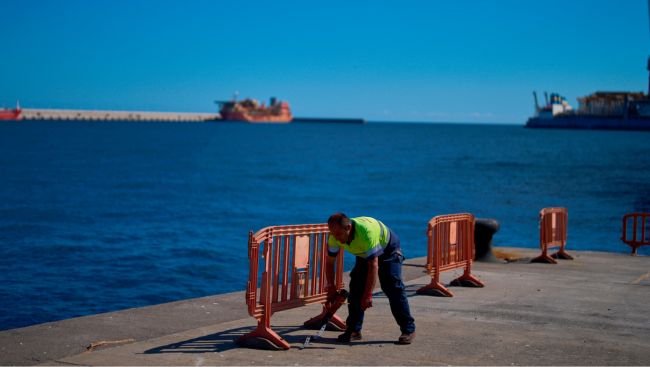
Picture Courtesy: AP Photo/Manu Fernandez