Sunday, December 21, 2025
ADVT 
Health

Eye changes can predict dementia

Darpan News Desk IANS, 26 Aug, 2014 07:55 AM
    A loss of cells in the retina is one of the earliest signs of a form of dementia in people with a genetic risk for the brain disorder - even before any changes appear in their behaviour, says a study.
     
    The US Researchers discovered that before any cognitive signs of dementia were present, these individuals showed a significant thinning of the retina compared with people who did not have the gene mutation.
     
    “The finding suggests that the retina acts as a type of 'window to the brain',” said Li Gan from San Francisco-based Gladstone Institutes, an independent and nonprofit biomedical research organisation.
     
    Retinal degeneration was detectable in mutation carriers prior to the onset of cognitive symptoms, establishing retinal thinning as one of the earliest observable signs of familial frontotemporal dementia (FTD).
     
    “This means that retinal thinning could be an easily measured outcome for clinical trials,” Gan added.
     
    To reach this conclusion, Gan and Ari Green, an associate professor of neurology at University of California, San Francisco (UCSF) studied a group of individuals who had a certain genetic mutation that is known to result in FTD.
     
    Although it is located in the eye, the retina is made up of neurons with direct connections to the brain.
     
    “The retina may be used as a model to study the development of FTD in neurons,” said lead author Michael Ward, a postdoctoral fellow at the Gladstone Institutes and assistant professor of neurology at UCSF.
     
    The study appeared in the Journal of Experimental Medicine.

    MORE Health ARTICLES

    Astronauts may face attention deficit risks

    Astronauts may face attention deficit risks
    Astronauts who are radiation-sensitive need to take extra care to protect their brains as they may face risks of attention deficit and slower reaction times, a study suggests.

    Astronauts may face attention deficit risks

    Befriend a cyber buddy to stay motivated

    Befriend a cyber buddy to stay motivated
    Although a human partner is a better motivator during exercise, a software-generated cyber partner can also be effective in making you work a little extra, research reveals.

    Befriend a cyber buddy to stay motivated

    New method to treat cocaine addiction effectively

    New method to treat cocaine addiction effectively
    There is hardly any effective medications for cocaine addiction, but researchers have now discovered a new compound that can halt cocaine addiction, raising hope for new treatment for drug addicts.

    New method to treat cocaine addiction effectively

    How bariatric surgery can help control diabetes

    How bariatric surgery can help control diabetes
    That bariatric surgery, or obesity surgery, leads to weight loss is well known, but researchers have now identified the mechanism why obesity surgery also leave positive effects on diabetes and heart diseases.

    How bariatric surgery can help control diabetes

    Now, 3D-printed plaster cast to heal wound faster

    Now, 3D-printed plaster cast to heal wound faster
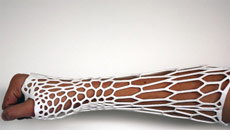
    In what could revolutionise plaster cast technology, a Turkish design student has unveiled a slick 3D-printed cast with ventilation holes that reduces healing time by around 40 percent than currently used plaster casts.

    Now, 3D-printed plaster cast to heal wound faster

    Smart cup that delivers coffee, news too!

    Smart cup that delivers coffee, news too!
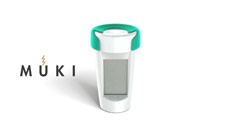
    Reading the morning newspaper while sipping a cup of coffee is set to become an even smoother experience as a Finnish coffee roastery company has developed a smart coffee cup that could also display an e-paper.

    Smart cup that delivers coffee, news too!