Sunday, December 21, 2025
ADVT 
Health

Eye changes can predict dementia

Darpan News Desk IANS, 26 Aug, 2014 07:55 AM
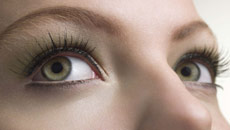
    A loss of cells in the retina is one of the earliest signs of a form of dementia in people with a genetic risk for the brain disorder - even before any changes appear in their behaviour, says a study.
     
    The US Researchers discovered that before any cognitive signs of dementia were present, these individuals showed a significant thinning of the retina compared with people who did not have the gene mutation.
     
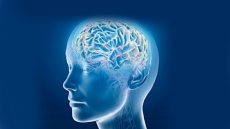
    “The finding suggests that the retina acts as a type of 'window to the brain',” said Li Gan from San Francisco-based Gladstone Institutes, an independent and nonprofit biomedical research organisation.
     
    Retinal degeneration was detectable in mutation carriers prior to the onset of cognitive symptoms, establishing retinal thinning as one of the earliest observable signs of familial frontotemporal dementia (FTD).
     
    “This means that retinal thinning could be an easily measured outcome for clinical trials,” Gan added.
     
    To reach this conclusion, Gan and Ari Green, an associate professor of neurology at University of California, San Francisco (UCSF) studied a group of individuals who had a certain genetic mutation that is known to result in FTD.
     
    Although it is located in the eye, the retina is made up of neurons with direct connections to the brain.
     
    “The retina may be used as a model to study the development of FTD in neurons,” said lead author Michael Ward, a postdoctoral fellow at the Gladstone Institutes and assistant professor of neurology at UCSF.
     
    The study appeared in the Journal of Experimental Medicine.

    MORE Health ARTICLES

    Now get a beer glass that would double the pleasure!

    Now get a beer glass that would double the pleasure!
    You love the taste of bubbly, now taste the glass too! A German firm Spiegelau has developed a brew-specific vessel that has a precise combination of high-end glass and strategic curves for maximising joy for your stout.

    Now get a beer glass that would double the pleasure!

    Did You Know: Nearly 1,700 US teens turn mothers per week

    Did You Know: Nearly 1,700 US teens turn mothers per week
    Births to younger teens aged between 15 and 17 have declined over the past 20 years in the US, but still account for about a quarter of teen births, or nearly 1,700 births a week, a report by the US Centers for Disease Control and Prevention (CDC) has revealed.

    Did You Know: Nearly 1,700 US teens turn mothers per week

    Soon, trees to deliver high-power storage devices

    Soon, trees to deliver high-power storage devices
    In a major breakthrough, scientists have found a novel way to make high-tech energy storage devices from your neighbourhood tree.

    Soon, trees to deliver high-power storage devices

    Revealed: How Chinese have faster eye movement

    Revealed: How Chinese have faster eye movement
    Ever wondered how quickly Chinese people move their eyes? It has nothing to do with the neurological behaviour or culture in people of Chinese origin.

    Revealed: How Chinese have faster eye movement

    Decoded: How You Decide Who Is More Popular

    Decoded: How You Decide Who Is More Popular
    Your brain knows for sure who attracts more eyeballs in your own circle as a new research has found how our brains recognise popular people. People track popularity largely through the brain region involved in anticipating rewards.

    Decoded: How You Decide Who Is More Popular

    How watching movies synchronises viewers' brains

    How watching movies synchronises viewers' brains
    Do you know that while watching a movie, your brain reacts to it immediately in a way similar to other people's brains? Researchers have succeeded in developing a method fast enough to observe immediate changes in the function of the brain even when watching a movie. 

    How watching movies synchronises viewers' brains