Friday, April 3, 2026
ADVT 
Health

Gateway to human memory in brain identified

Darpan News Desk IANS, 28 Nov, 2014 12:42 PM
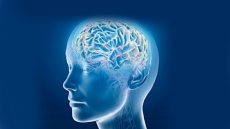
    An international team has successfully determined with a level of precision never achieved before the location in the brain where memories are generated.
     
    The team was able to pinpoint this location down to specific circuits of the human brain.
     
    The results and method of the study is likely to assist in acquiring a better understanding of the effects Alzheimer's disease has on the brain.
     
    "We have been able to locate the generation of human memories to certain neuronal layers within the hippocampus and the entorhinal cortex. We were able to determine which neuronal layer was active," explained Emrah Duzel, director, Institute of Cognitive Neurology and Dementia Research at University of Magdeburg, Germany.
     
    For their study, the scientists used a particularly accurate type of magnetic resonance imaging (MRI) technology.
     
    They examined the brains of persons who had volunteered to participate in a memory test.
     
    "Previously used MRI techniques were not precise enough to capture this directional information. Hence, this is the first time we have been able to show where in the brain the doorway to memory is located," noted Duzel.
     
    They used a special type of magnetic resonance imaging technology called "7 Tesla ultra-high field MRI."
     
    This enabled them to determine the activity of individual brain regions with unprecedented accuracy.
     
    "This measuring technique allows us to track the flow of information inside the brain and examine the areas that are involved in the processing of memories in great detail," stressed Duzel.
     
    The study appeared in the journal Nature Communications.

    MORE Health ARTICLES

    Now get a beer glass that would double the pleasure!

    Now get a beer glass that would double the pleasure!
    You love the taste of bubbly, now taste the glass too! A German firm Spiegelau has developed a brew-specific vessel that has a precise combination of high-end glass and strategic curves for maximising joy for your stout.

    Now get a beer glass that would double the pleasure!

    Did You Know: Nearly 1,700 US teens turn mothers per week

    Did You Know: Nearly 1,700 US teens turn mothers per week
    Births to younger teens aged between 15 and 17 have declined over the past 20 years in the US, but still account for about a quarter of teen births, or nearly 1,700 births a week, a report by the US Centers for Disease Control and Prevention (CDC) has revealed.

    Did You Know: Nearly 1,700 US teens turn mothers per week

    Soon, trees to deliver high-power storage devices

    Soon, trees to deliver high-power storage devices
    In a major breakthrough, scientists have found a novel way to make high-tech energy storage devices from your neighbourhood tree.

    Soon, trees to deliver high-power storage devices

    Revealed: How Chinese have faster eye movement

    Revealed: How Chinese have faster eye movement
    Ever wondered how quickly Chinese people move their eyes? It has nothing to do with the neurological behaviour or culture in people of Chinese origin.

    Revealed: How Chinese have faster eye movement

    Decoded: How You Decide Who Is More Popular

    Decoded: How You Decide Who Is More Popular
    Your brain knows for sure who attracts more eyeballs in your own circle as a new research has found how our brains recognise popular people. People track popularity largely through the brain region involved in anticipating rewards.

    Decoded: How You Decide Who Is More Popular

    How watching movies synchronises viewers' brains

    How watching movies synchronises viewers' brains
    Do you know that while watching a movie, your brain reacts to it immediately in a way similar to other people's brains? Researchers have succeeded in developing a method fast enough to observe immediate changes in the function of the brain even when watching a movie. 

    How watching movies synchronises viewers' brains