Friday, December 19, 2025
ADVT 
Health

Gateway to human memory in brain identified

Darpan News Desk IANS, 28 Nov, 2014 12:42 PM
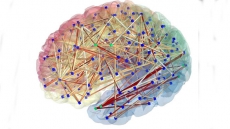
    An international team has successfully determined with a level of precision never achieved before the location in the brain where memories are generated.
     
    The team was able to pinpoint this location down to specific circuits of the human brain.
     
    The results and method of the study is likely to assist in acquiring a better understanding of the effects Alzheimer's disease has on the brain.
     
    "We have been able to locate the generation of human memories to certain neuronal layers within the hippocampus and the entorhinal cortex. We were able to determine which neuronal layer was active," explained Emrah Duzel, director, Institute of Cognitive Neurology and Dementia Research at University of Magdeburg, Germany.
     
    For their study, the scientists used a particularly accurate type of magnetic resonance imaging (MRI) technology.
     
    They examined the brains of persons who had volunteered to participate in a memory test.
     
    "Previously used MRI techniques were not precise enough to capture this directional information. Hence, this is the first time we have been able to show where in the brain the doorway to memory is located," noted Duzel.
     
    They used a special type of magnetic resonance imaging technology called "7 Tesla ultra-high field MRI."
     
    This enabled them to determine the activity of individual brain regions with unprecedented accuracy.
     
    "This measuring technique allows us to track the flow of information inside the brain and examine the areas that are involved in the processing of memories in great detail," stressed Duzel.
     
    The study appeared in the journal Nature Communications.

    MORE Health ARTICLES

    Eating tomatoes daily can reduce prostate cancer risk

    Eating tomatoes daily can reduce prostate cancer risk
    Men who eat tomatoes over ten portions a week have an 18 percent lower risk of developing prostate cancer, new research shows....

    Eating tomatoes daily can reduce prostate cancer risk

    Brains of depressed young adults 'hyper-connected'

    Brains of depressed young adults 'hyper-connected'
    Several regions of the brain in young adults who have a history of depression are "hyper-connected" -- or are talking to each other a little too much, new research finds....

    Brains of depressed young adults 'hyper-connected'

    Canada pulling 3 member lab team back from Sierra Leone over Ebola fears

    Canada pulling 3 member lab team back from Sierra Leone over Ebola fears
    Canada is bringing three scientists home from Kailahun, Sierra Leone, a post which the World Health Organization has temporarily closed to investigate the infection of an international medical responder working there.

    Canada pulling 3 member lab team back from Sierra Leone over Ebola fears

    More kids at risk of developing diabetes from womb, says study

    More kids at risk of developing diabetes from womb, says study
    New research shows that children exposed to gestational diabetes in the wombs are nearly six times more likely to develop diabetes or prediabetes than children...

    More kids at risk of developing diabetes from womb, says study

    Low-dose aspirin reduces blood clot risk

    Low-dose aspirin reduces blood clot risk
    Low-dose aspirin can help prevent new blood clots among people who are at risk and have already suffered a blood clot, says a promising study....

    Low-dose aspirin reduces blood clot risk

    Knee surgery not needed for mild osteoarthritis

    Knee surgery not needed for mild osteoarthritis
    Middle-aged and older patients with mild osteoarthritis of the knee may not benefit from the procedure of arthroscopic knee surgery, says new research....

    Knee surgery not needed for mild osteoarthritis