Sunday, February 1, 2026
ADVT 
Health

Gene behind benign breast tumours identified

Darpan News Desk Darpan, 21 Jul, 2014 07:17 AM
    Researchers have identified a critical gene that could help clinicians distinguish fibroadenomas cases from breast cancer. Fibroadenomas is the most common benign breast tumour in women of reproductive age.
     
    The researchers used advanced DNA sequencing technologies to identify the gene called MED12 that was repeatedly disrupted in nearly 60 percent of fibroadenoma cases.


    "It is amazing that these common breast tumours can be caused by such a precise disruption in a single gene. Our findings show that even common diseases can have a very exact genetic basis. Importantly, now that we know the cause of fibroadenoma, this research can have many potential applications," said professor Tan Puay Hoon from Singapore General Hospital.
     
    For example, measuring the MED12 gene in breast lumps may help clinicians to distinguish fibroadenomas from other types of breast cancer, Tan added.
     
    “Drugs targeting the MED12 pathway may also be useful in patients with multiple and recurrent fibroadenomas as this could help patients avoid surgery and relieve anxiety,” Tan noted.
     
    The researchers began a study to identify if there are any genetic abnormalities in fibroadenomas that may be used to differentiate them.


    By analysing all the protein-coding genes in a panel of fibroadenomas from Singapore patients, the team identified frequent mutations in a gene called MED12 in a remarkable 60 percent of fibroadenomas.


    The findings have also deepened the conceptual understanding of how tumours can develop.
     
    Like most breast tumours including breast cancers, fibroadenomas consist of a mixed population of different cell types, called epithelial cells and stromal cells.
     
    However, unlike breast cancers where the genetic abnormalities arise from the epithelial cells, the scientists, using a technique called laser capture microdissection (LCM), showed that the pivotal MED12 mutations in fibroadenomas are found in the stromal cells.
     
    The study appeared in the journal Nature Genetics.

    MORE Health ARTICLES

    Prostate cancer linked with sex: Study

    Prostate cancer linked with sex: Study
    A study in the US has found that prostate cancer could be caused by a common infection passed on during intercourse, a leading English daily reported Tuesday.

    Prostate cancer linked with sex: Study

    Don't drink and swim: Drunk zebrafish shows why humans go nuts after booze

    Don't drink and swim: Drunk zebrafish shows why humans go nuts after booze
    High on booze, a zebrafish nearly doubled her speed in an experiment, leaving scientists with results that may help them find why some people on a high behave like weirdos in a party.

    Don't drink and swim: Drunk zebrafish shows why humans go nuts after booze

    E-cigarettes boost drug-resistant bacteria

    E-cigarettes boost drug-resistant bacteria
    Despite being labeled as a healthy alternative to cigarettes, e-cigarettes may increase the virulence of drug-resistant and potentially life-threatening bacteria, a study has warned.

    E-cigarettes boost drug-resistant bacteria

    Chip that precisely detects cancer early created

    Chip that precisely detects cancer early created
    What if we could diagnose cancer while it was still only affecting a few localised cells? Here comes an ultra-sensitive nano-chip that is capable of detecting cancer early.

    Chip that precisely detects cancer early created

    Yoga gets a new home in Finland

    Yoga gets a new home in Finland
    Yoga is set to get a new home in Finland when a studio is opened at the airport of this capital of the Nordic country.

    Yoga gets a new home in Finland

    Prehistoric skeleton confirms first American origins

    Prehistoric skeleton confirms first American origins
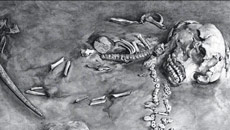
    Researchers said Thursday that they have identified a nearly complete skeleton in an underwater Mexican cave, a discovery that could help resolve a longstanding debate about the origins of the first people to inhabit the Americas.

    Prehistoric skeleton confirms first American origins