Sunday, December 28, 2025
ADVT 
Health

Gene behind sweating disorder detected

Darpan News Desk IANS, 21 Oct, 2014 07:30 AM
    Mutation of a single gene blocks sweat production leading to an increased risk of hyperthermia, also known as heatstroke, said a study.
     
    The gene called ITPR2 controls a basic cellular process in sweat glands, promoting the release of calcium necessary for normal sweat production, and its loss results in impaired sweat secretion, found the team.
     
    ITPR2 contains IP3 receptor type 2 (IP3R2) protein that forms a channel in the membrane of the endoplasmic reticulum, an organelle within cells that stores an ion called calcium, found the study.
     
    "This is the first report of IP3 receptor type 2 mutation in human disease. The surprise was that a point mutation, not a large deletion was enough to cause the human disorder," said Katsuhiko Mikoshiba, molecular cell biologist from the RIKEN Brain Science Institute in Japan.
     
    The group of scientists led by Niklas Dahl, genetics expert at the Uppsala University, in Sweden studied rare single-gene diseases for identifying causative genes, thereby helping in the development of diagnostic or treatment tools.
     
    For their study, the team worked with collaborators in Pakistan, where they identified a family of many children who could not sweat, a rare condition called anhidrosis.
     
    Analysis of the patients' genomes revealed a mutation in a gene called ITPR2.
     
    Opening of the IP3R channel releases calcium, triggering essential cell behaviour such as movement and secretion, noted the study.
     
    A single nucleotide change in the DNA code resulted in a change in protein structure impeding the ability of the channel to release calcium, found the team.
     
    Efforts to develop drugs for regulating the IP3R are underway.
     
    The study appeared in the Journal of Clinical Investigation.
    MORE Health ARTICLES

    Revealed: How dinosaurs shrunk into birds

    Revealed: How dinosaurs shrunk into birds
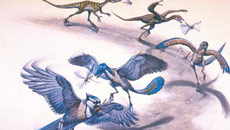
    Dinosaurs are not extinct, go tell this to your kids. There are about 10,000 species alive today - in the form of birds!

    Revealed: How dinosaurs shrunk into birds

    Sexual practices haven't changed much: Survey

    Sexual practices haven't changed much: Survey
    The time has changed but sexual practices may not. According to a fascinating study, 'hookup culture' among today's youth is just a myth and their sexual preferences are still the same as those of their parents.

    Sexual practices haven't changed much: Survey

    Mysterious 'exploding head syndrome' more common in women

    Mysterious 'exploding head syndrome' more common in women
    While most people with “exploding head syndrome” hear an abrupt loud outbursts, some hear the explosion in one ear, some in both ears, and some within their heads.

    Mysterious 'exploding head syndrome' more common in women

    'Ice' drug directly linked to violence: Study

    'Ice' drug directly linked to violence: Study
    Australian researchers have found a six-fold increase in violent behaviour among chronic users of the drug methamphetamine, commonly known as "ice", the Australian National University (ANU) reported Wednesday.

    'Ice' drug directly linked to violence: Study

    We can spot only two faces at a time?

    We can spot only two faces at a time?
    In what could be relevant to eye-witness testimony or neuro-psychological rehabilitation, a study has found that we can only see two faces in a crowd even if the faces belong to famous people.

    We can spot only two faces at a time?

    `Exposure to media violence may turn kids aggressive'

    `Exposure to media violence may turn kids aggressive'
    Along with limiting screen time, monitoring the content of what your kids watch on television or what video games they play may be equally important as exposure to media violence may turn them them aggressive, a study indicated.

    `Exposure to media violence may turn kids aggressive'