Sunday, December 28, 2025
ADVT 
Health

Gene behind sweating disorder detected

Darpan News Desk IANS, 21 Oct, 2014 07:30 AM
    Mutation of a single gene blocks sweat production leading to an increased risk of hyperthermia, also known as heatstroke, said a study.
     
    The gene called ITPR2 controls a basic cellular process in sweat glands, promoting the release of calcium necessary for normal sweat production, and its loss results in impaired sweat secretion, found the team.
     
    ITPR2 contains IP3 receptor type 2 (IP3R2) protein that forms a channel in the membrane of the endoplasmic reticulum, an organelle within cells that stores an ion called calcium, found the study.
     
    "This is the first report of IP3 receptor type 2 mutation in human disease. The surprise was that a point mutation, not a large deletion was enough to cause the human disorder," said Katsuhiko Mikoshiba, molecular cell biologist from the RIKEN Brain Science Institute in Japan.
     
    The group of scientists led by Niklas Dahl, genetics expert at the Uppsala University, in Sweden studied rare single-gene diseases for identifying causative genes, thereby helping in the development of diagnostic or treatment tools.
     
    For their study, the team worked with collaborators in Pakistan, where they identified a family of many children who could not sweat, a rare condition called anhidrosis.
     
    Analysis of the patients' genomes revealed a mutation in a gene called ITPR2.
     
    Opening of the IP3R channel releases calcium, triggering essential cell behaviour such as movement and secretion, noted the study.
     
    A single nucleotide change in the DNA code resulted in a change in protein structure impeding the ability of the channel to release calcium, found the team.
     
    Efforts to develop drugs for regulating the IP3R are underway.
     
    The study appeared in the Journal of Clinical Investigation.
    MORE Health ARTICLES

    Now, 3D-printed plaster cast to heal wound faster

    Now, 3D-printed plaster cast to heal wound faster
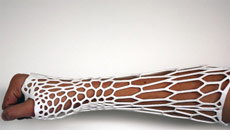
    In what could revolutionise plaster cast technology, a Turkish design student has unveiled a slick 3D-printed cast with ventilation holes that reduces healing time by around 40 percent than currently used plaster casts.

    Now, 3D-printed plaster cast to heal wound faster

    Smart cup that delivers coffee, news too!

    Smart cup that delivers coffee, news too!
    Reading the morning newspaper while sipping a cup of coffee is set to become an even smoother experience as a Finnish coffee roastery company has developed a smart coffee cup that could also display an e-paper.

    Smart cup that delivers coffee, news too!

    An 'upside-down planet' discovered

    An 'upside-down planet' discovered
    Like so many interesting discoveries, this one happened largely by accident. An astronomer has discovered an ‘upside-down planet’ that reveals new method for studying binary star systems.

    An 'upside-down planet' discovered

    Our ancestors enjoyed summer holidays at Antartica!

    Our ancestors enjoyed summer holidays at Antartica!
    If this information stands true, the history books have to be rewritten soon. According to scientists, some parts on the coldest region on our earth - Antartica - was as warm as today's California coast.

    Our ancestors enjoyed summer holidays at Antartica!

    Garnish food with edible flowers for disease-free life!

    Garnish food with edible flowers for disease-free life!
    Forget food, try some flowers instead to increase immunity. If we go by a new research, common edible flowers in China are rich in phenolics and have excellent antioxidant capacity.

    Garnish food with edible flowers for disease-free life!

    Humans left Africa in two migration waves: Study

    Humans left Africa in two migration waves: Study
    In a significant discovery, researchers have found that modern humans may have dispersed in more than one wave of migration out of Africa.

    Humans left Africa in two migration waves: Study