Wednesday, December 24, 2025
ADVT 
Health

Gene linked to profound vision loss discovered

Darpan News Desk, 18 Jan, 2015 12:03 PM
    An exhaustive hereditary analysis of a large Louisiana family with vision issues has revealed a new gene related to an incurable eye disorder called retinitis pigmentosa.
     
    Retinitis pigmentosa damages the retina and its early symptoms include decreased night vision and peripheral vision and this may end up in blindness.
     
    The retina works like a film as it converts images into electrical signals that can be processed by the brain.
     
    "The story of the hexokinase 1 (HK1) mutation is itself interesting. What we found is a mutation present in families from Louisiana, Canada and Sicily. Our evidence suggests the mutation arose in a common ancestor who lived centuries ago," said Stephen P. Daiger from University of Texas Health Science Center.
     
    With the discovery, the total number of genes associated with this sight-threatening disease has gone up more than 60.
     
    "This information is important because it helps affected families cope with the disorder, helps explain the biologic basis of these diseases and suggests targets for drug treatments and gene therapy," said Daiger.
     
    "Daiger is trying to make a breakthrough in potentially blinding diseases with no known treatments," said Richard S. Ruiz, professor of ophthalmology at University of Texas Health Science Center.
     
    Equipped with the genetic profiles of family members, Daiger's team has identified differences in the genetic makeup of those with the disease.
     
    The researchers also use family histories and DNA tests to glean information about the condition's hereditary nature.
     
    There are different types of retinitis pigmentosa and Daiger's laboratory is focused on the autosomal dominant type.
     
    The study appeared in the journal Investigative Ophthalmology & Visual Science.

    MORE Health ARTICLES

    'Love hormone' bonds animals like humans

    'Love hormone' bonds animals like humans
    And you thought you had a patent on 'love hormone' when it comes to showing affection! Dogs too have oxytocin and release it in a good quantity when in love or looking for bonding.

    'Love hormone' bonds animals like humans

    Can you believe it? Metabolism existed even before origin of life, reveales study

    Can you believe it? Metabolism existed even before origin of life, reveales study
    The mystery behind how the first organisms on earth could have become metabolically active has been unlocked.

    Can you believe it? Metabolism existed even before origin of life, reveales study

    Fly's genome study offers hope for sleeping sickness

    Fly's genome study offers hope for sleeping sickness
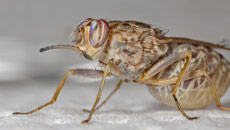
    With genome decoding of tsetse fly that causes the potentially fatal sleeping sickness disease, scientists have discovered new clues to the diet, vision and reproductive strategies of the insect.

    Fly's genome study offers hope for sleeping sickness

    Technology to catch dozing drivers on the go

    Technology to catch dozing drivers on the go
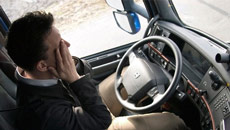
    Long rides at night can now become a lot more pleasant and safe if you listen to researchers who have developed an inexpensive and easier way to find out when the person behind the wheel is about to nod off.

    Technology to catch dozing drivers on the go

    Astronauts may face attention deficit risks

    Astronauts may face attention deficit risks
    Astronauts who are radiation-sensitive need to take extra care to protect their brains as they may face risks of attention deficit and slower reaction times, a study suggests.

    Astronauts may face attention deficit risks

    Befriend a cyber buddy to stay motivated

    Befriend a cyber buddy to stay motivated
    Although a human partner is a better motivator during exercise, a software-generated cyber partner can also be effective in making you work a little extra, research reveals.

    Befriend a cyber buddy to stay motivated