Friday, May 22, 2026
ADVT 
Health

Gene that mediates ageing identified

Darpan News Desk IANS, 18 Jul, 2014 01:56 PM
    In what could point towards the possibility of one day using therapeutics to combat ageing, researchers have found in animal models that a single gene plays a surprising role in ageing that can be detected early in development.
     
    "We believe that a previously uncharacterized developmental gene known as Spns1 may mediate the ageing process," said Shuji Kishi, an assistant professor at The Scripps Research Institute (TSRI) in the US.
     
    "Even a partial loss of Spns1 function can speed ageing," Kishi noted.
     
    Using various genetic approaches to disturb Spns1 during the embryonic or larval stages of zebrafish, the scientists were able to produce some models with a shortened life span that lived long lives.
     
    While most studies of "senescence" - declines in a cell's power of division and growth - have focused on later stages of life, the study is intriguing in exploring this phenomenon in early stages.
     
    "Mutations to Spns1 disturbs developmental senescence and badly affects the long-term bio-chronological ageing process," Kishi said.
     
    The new study shows that Spns1, in conjunction with another pair of tumour suppressor genes, beclin 1 and p53 can, influences developmental senescence through two differential mechanisms: the Spns1 defect was enhanced by Beclin 1 but suppressed by 'basal' p53.
     
    In addition to affecting senescence, Spns1 impedes autophagy, the process whereby cells remove unwanted or destructive proteins and balance energy needs during various life stages.
     
    The study appeared in the journal PLOS Genetics.

    MORE Health ARTICLES

    Sexual conflict over mating affects women more: Study

    Sexual conflict over mating affects women more: Study
    In experiments on beetles, British researchers at University of Exeter used artificial selection and mating crosses among selection lines to determine if and how mating behaviours co-evolve with parental care behaviours.

    Sexual conflict over mating affects women more: Study

    Mind vs body: What is a better lie detector?

    Mind vs body: What is a better lie detector?
    To know if the person in front of you is lying, you may rely a lot on your instincts as more than the conscious mind, the body may act as a better lie detector, suggests a study.

    Mind vs body: What is a better lie detector?

    Alcohol, drugs together put kids at higher driving risk

    Alcohol, drugs together put kids at higher driving risk
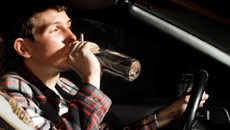
    Teenagers who drink alcohol and smoke marijuana together may be at increased risk for unsafe driving, a study shows.

    Alcohol, drugs together put kids at higher driving risk

    New diabetes, obesity drug: Indian-American's promising research

    New diabetes, obesity drug: Indian-American's promising research
    Two researchers at Indiana University, including an Indian-American, are leading the way towards developing a new potential non-insulin drug for diabetes and obesity, which needs to be taken only once a week.

    New diabetes, obesity drug: Indian-American's promising research

    Build super muscles with soy-dairy protein

    Build super muscles with soy-dairy protein
    Not happy with gym results on your muscles? Try a blend of soy and dairy proteins after resistance exercises as this has now been touted as the best way to build muscle mass.

    Build super muscles with soy-dairy protein

    'Love hormone' bonds animals like humans

    'Love hormone' bonds animals like humans
    And you thought you had a patent on 'love hormone' when it comes to showing affection! Dogs too have oxytocin and release it in a good quantity when in love or looking for bonding.

    'Love hormone' bonds animals like humans