Tuesday, December 23, 2025
ADVT 
Health

Genetic mutations can't explain asthma

Darpan News Desk IANS, 18 Jan, 2015 12:01 PM
    Despite a strong suspected link between genetics and asthma, genetic mutations account for only a small part of the risk for developing the disease, shows a new study.
     
    Rare and low frequency genetic mutations have been thought to explain this missing heritability, but they are unlikely to play a major role.
     
    Analysing the coding regions of genomes of over 11,000 individuals, the scientists identified mutations in just three genes that were associated with asthma risk.
     
    These three genes include GRASP, GSDMB and MTHFR.
     
    The study suggests gaps in the current understanding of asthma genetics.
     
    "Previous studies have likely overestimated the heritability of asthma. This could be because those estimates are based on correlations between family members that share environment as well as genes, which could inflate the heritability," said Carole Ober from department of human genetics at University of Chicago.
     
    Previous studies did not consider gene-environment interactions and these are particularly important in establishing individual risks for asthma.
     
    Catherine Igartua from University of Chicago evaluated nearly 33,000 rare or low frequency mutations in more than 11,000 individuals of a variety of ethnicities.
     
    She used a technique that allowed her to study mutations common in one ethnicity, but rare in others.
     
    These genes, involved in protein scaffolding, apoptosis regulation and vitamin B9 metabolism, respectively, have so far unknown roles in asthma.
     
    Although rare mutations might not contribute much to population asthma risk, these genes still have the potential to serve as targets for therapeutic development.
     
    "It was assumed that there would be rare mutations with larger effect sizes than the common variants we have been studying," Ober noted.
     
    The findings appeared in Nature Communications.
    MORE Health ARTICLES

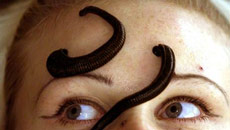
    Believe it or not, Leeches can fix torn ear!

    Believe it or not, Leeches can fix torn ear!
    A 19-year-old woman in the US who lost her ear to a dog attack got it back with the help of a few leeches.

    Believe it or not, Leeches can fix torn ear!

    New insights on how brain develops memories

    New insights on how brain develops memories
    In a key study that may give insights into disorders such as schizophrenia and depression, scientists have studied our ability to store memories in brain during childhood.

    New insights on how brain develops memories

    Go for food with rough texture for a healthy you!

    Go for food with rough texture for a healthy you!
    In contrast, when made to focus on the calorie content, the participants consumed a higher volume of brownies when they were hard (vs soft).

    Go for food with rough texture for a healthy you!

    Robot sex to determine how life began

    Robot sex to determine how life began
    This may come straight from Ripley's Believe It or Not! Scientists have performed robot sex to find how life began on earth. Scientists used rat-sized robots to study evolutionary patterns over thousands of generations without them growing old in the process.

    Robot sex to determine how life began

    Internal body clock puzzle solved

    Internal body clock puzzle solved
    Our internal body clock, influenced by the exposure to light, dictates the wake-sleep cycle.

    Internal body clock puzzle solved

    Want to be happy? Be extrovert

    Want to be happy? Be extrovert
    If happiness is what you are seeking, just be yourself - call an old friend to dinner or smile at a passerby - as a study has found that people with outgoing behaviour are a happier lot across cultures.

    Want to be happy? Be extrovert