Tuesday, December 16, 2025
ADVT 
Health

Google scientists to find 'hidden' cancer via nanoparticles

Darpan News Desk IANS, 29 Oct, 2014 07:29 AM
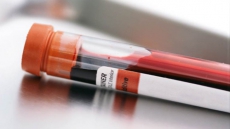
    In a pioneering research, a Google life sciences team - which has two senior Indian-origin researchers - is set to find signs of deadly diseases like cancer by sending 'nanoparticles' in the bloodstream of a person and then get the results via a wearable device.
     
    The aim is to provide an early warning system for life-threatening diseases which can lead to an effective treatment, Wall Street Journal reported.
     
    “Every test you ever go to the doctor for will be done through this system,” Andrew Conrad, head of the Life Sciences team at the Google X research lab, was quoted as saying at a WSJ conference.
     
    The tiny “nanoparticles” will be delivered via a pill.
     
    They would attach themselves to cells, proteins or other molecules inside the body to find out of something is wrong.
     
    Researchers are currently looking for coatings that will help “nanoparticles” bind to specific cells, the report added.
     
    According to Conrad, the firm will not collect or store medical data itself but will license the technology to others.
     
    Google has hired more than 100 experts for the project from disciplines including astrophysicists, immunology, biology, oncology, cardiology and chemistry.
     
    Vikram (Vik) Bajaj, scientific lead for Google X's nanotechnology programme, is one of the members of the Google life sciences team.
     
    Bajaj is an expert in areas like molecular imaging, magnetic resonance imaging (MRI) for diagnostics, the structural biology of neurodegenerative disease, millimeter wave devices and clinical bioinformatics.
     
    The other Indian-origin researcher is Sanjeev Mariathasan, scientific lead for systems immunology on the nanotechnology project.
     
    Mariathasan's research interests include mechanisms of inflammation, malignant blood disorders and infectious disease.
    MORE Health ARTICLES

    New method can detect epilepsy symptoms early in kids

    New method can detect epilepsy symptoms early in kids
    Using an electroencephalography (EEG) analytical method, a team of doctors and scientists in Taiwan has successfully developed a tool to detect..

    New method can detect epilepsy symptoms early in kids

    Vitamin B1 deficiency can damage your brain

    Vitamin B1 deficiency can damage your brain
    Include more vitamin B1-rich food in your diet as neurologists have underlined that deficiency of a single vitamin B1 (or thiamine) can cause a potentially...

    Vitamin B1 deficiency can damage your brain

    Cure for glaucoma in sight

    Cure for glaucoma in sight
    A cure is now in sight for the dangerous eye disease glaucoma, which is a leading cause of irreversible blindness, says a new study....

    Cure for glaucoma in sight

    Sleeping brain active even when you doze off

    Sleeping brain active even when you doze off
    Have you ever performed calculations or classified words before falling asleep and then experienced continuing those calculations during your snooze? Well, salute your wonder brain....

    Sleeping brain active even when you doze off

    Even Fluoride-rich Toothpaste Can't Kill Bacteria

    Even Fluoride-rich Toothpaste Can't Kill Bacteria
    Know why your toothpaste is not able to fight bad breath or tooth decay? Blame it on the bacteria itself.

    Even Fluoride-rich Toothpaste Can't Kill Bacteria

    AB blood type may increase dementia risk

    AB blood type may increase dementia risk
    "Our study looks at blood type and risk of cognitive impairment," said study author Mary Cushman from the University of Vermont, College of Medicine in Burlington....

    AB blood type may increase dementia risk