TORONTO — Hockey legend Gordie Howe has suffered a stroke, his family has revealed. The stroke has left Howe with loss of function on one side of his body and speech difficulties.
What are strokes? Why do they cause the type of damage they do? Here are five things you should know about these medical emergencies, which afflict about 50,000 Canadians a year and claim about 14,000 Canadian lives each year, according to the Heart and Stroke Foundation.
THERE ARE DIFFERENT TYPES OF STROKES:
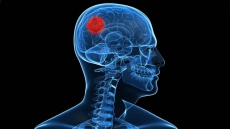
Strokes are events that involve abnormal and damaging blood flow to the brain. Some are caused when the blood flow is cut off by a clot; that's called an ischemic (pronounced Is-SCHEME-Ick) stroke. Ischemic strokes make up about 80 per cent of all strokes. There are also hemorrhagic strokes, where bleeding in the brain floods some tissues and cuts off supply to others. They may be caused by an aneurysm, the bursting of a weakened area of an artery.
A third kind of stroke is known as transient ischemic attacks, TIAs or mini-strokes. TIAs are harder to spot than full-on strokes, but the damage they cause can accumulate. They are also a warning sign. People who have them are at higher risk of having a stroke. A TIA should not be ignored; seek medical care.
Howe's family hasn't said which type of stroke he had.
GETTING QUICK CARE CAN LIMIT STROKE DAMAGE:
The adage the medical profession uses is "Time is brain." If someone is having an ischemic stroke, doctors can use clot-busting drugs to break up the blockage and limit the damage. But the window in which the treatment works is small — three hours for most patients, 4.5 hours for some others. So getting to hospital quickly is critical.

Speed is also crucial when someone has suffered a hemorrhagic stroke. Procedures to stop the bleed must be done to limit the damage
THE SIGNS OF STROKE:
There are a couple of mnemonics — memory aids — that have been developed to help people recognize the signs of stroke. One is known as F.A.S.T, as in get treatment fast. F stands for face: does one side droop if the person tries to smile? A is for arm: ask the person to raise both arms. Does one drift downward? S is for speech: is it slurred? Can the person repeat a simple statement? T is for time: Any of these signs is a trigger to call 911.
The other memory aid is called Give Me 5 for Stroke, which looks for abnormalities is some basic skills. Walk: is the person's balance disrupted? Talk: is speech slurred or part of the face drooping? Reach: is one side of the body weak or numb? See: has vision in one or both eyes been suddenly lost or reduced? Feel: is the person suffering from a severe headache?
STROKES CAN HAPPEN AT ANY AGE:
Most strokes occur in adults over the age of 65. Howe, for instance, is 86.
But younger adults and even children are not immune. Stacey Yepes of Thornhill, Ont., brought that message home to the public in a big way earlier this year when she used her smart phone to video tape herself having a stroke. The 49-year old had strokes two days running, but when she sought care after the first was told she was suffering from was stress, not stroke. The video footage changed her diagnosis.
Children too can have strokes. Those who have heart conditions, trauma to the brain or neck and blood clotting disorders are at higher risk of stroke.
STROKES CAN BE PREVENTED:
Experts say many strokes can be prevented by controlling the modifiable risk factors that contribute to stroke. These are things like keeping blood pressure under control, lowering cholesterol, maintaining a healthy weight, keeping physically active, avoiding excessive alcohol consumption, managing stress and not smoking.