Friday, December 19, 2025
ADVT 
Health

Hand-held device can detect deadly skin cancer

Darpan News Desk IANS, 07 Aug, 2014 09:03 AM
    A new hand-held device that uses lasers and sound waves may change the way doctors treat and diagnose the deadly skin cancer melanoma, says new research.
     
    The instrument can be used directly on a patient and accurately measure how deep a melanoma tumour extends into the skin, providing valuable information for treatment, diagnosis or prognosis.
     
    The technique relies on the photoacoustic effect in which light is converted into vibrations.
     
    In the case of the new device, a laser beam shines into the skin at the site of a tumour.
     
    Melanin, the skin pigment that's also in tumours, absorbs the light whose energy is transferred into high-frequency acoustic waves.
     
    Unlike light, acoustic waves do not scatter as much when traveling through skin.
     
    Tumour cells will produce more melanin than the surrounding healthy skin cells, and as a result, the acoustic waves can be used to map the entire tumour with high resolution.
     
    The device has a detector that can then turn the acoustic signal into a three-dimensional image on a screen.
     
    "Being able to measure the depth of the tumour in vivo enables doctors to determine prognoses more accurately a" potentially at the time of initial evaluation a" and plan treatments and surgeries accordingly," said dermatologist Lynn Cornelius from Washington University in St Louis.
     
    The latest version is not only hand-held but it also delivers light around and below the tumour, which generates a bright image of the tumour's bottom and an accurate measurement of its depth, researchers added.
     
    The paper was published in the journal Optics Letters.

    MORE Health ARTICLES

    Can you believe it? Metabolism existed even before origin of life, reveales study

    Can you believe it? Metabolism existed even before origin of life, reveales study
    The mystery behind how the first organisms on earth could have become metabolically active has been unlocked.

    Can you believe it? Metabolism existed even before origin of life, reveales study

    Fly's genome study offers hope for sleeping sickness

    Fly's genome study offers hope for sleeping sickness
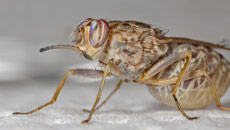
    With genome decoding of tsetse fly that causes the potentially fatal sleeping sickness disease, scientists have discovered new clues to the diet, vision and reproductive strategies of the insect.

    Fly's genome study offers hope for sleeping sickness

    Technology to catch dozing drivers on the go

    Technology to catch dozing drivers on the go
    Long rides at night can now become a lot more pleasant and safe if you listen to researchers who have developed an inexpensive and easier way to find out when the person behind the wheel is about to nod off.

    Technology to catch dozing drivers on the go

    Astronauts may face attention deficit risks

    Astronauts may face attention deficit risks
    Astronauts who are radiation-sensitive need to take extra care to protect their brains as they may face risks of attention deficit and slower reaction times, a study suggests.

    Astronauts may face attention deficit risks

    Befriend a cyber buddy to stay motivated

    Befriend a cyber buddy to stay motivated
    Although a human partner is a better motivator during exercise, a software-generated cyber partner can also be effective in making you work a little extra, research reveals.

    Befriend a cyber buddy to stay motivated

    New method to treat cocaine addiction effectively

    New method to treat cocaine addiction effectively
    There is hardly any effective medications for cocaine addiction, but researchers have now discovered a new compound that can halt cocaine addiction, raising hope for new treatment for drug addicts.

    New method to treat cocaine addiction effectively