Tuesday, February 10, 2026
ADVT 
Health

Have Peanuts With Meal To Ward Off Heart Diseases

Darpan News Desk IANS, 31 Mar, 2015 12:00 PM
    Including peanut in a high-fat meal may protect your heart from the negative effects of such a diet, suggests a new study.
     
    Peanuts can be substituted for high-fat, nutrient-poor foods in the diet that contain solid fats, said the study recently presented at the American Society for Nutrition's 79th scientific sessions and annual meeting in Boston.
     
    "Previous studies have shown that individuals who consume peanuts more than two times a week have a lower risk of coronary heart disease," said lead researcher Xiaoran Liu, graduate student at the Pennsylvania State University, US.
     
    "This study indicates that the protective effect of peanut consumption could be due, in part, to its beneficial effect on artery health," Liu added.
     
    The purpose of this research was to evaluate vascular function after a high-fat meal.
     
    Overweight males were randomised to consume either shake with peanuts or a control meal (a shake without peanuts) that were matched for energy and macronutrients.
     
    The lipid profile, glucose and insulin were measured five times after each meal.
     
    Flow-mediated dilatation (FMD) was measured to assess vascular function.
     
    The control meal decreased FMD by 1.2 percent compared to baseline. In contrast, there was no decrease in FMD after the peanut meal.
     
    These results demonstrate that the peanut meal maintained normal vascular function whereas the control meal impaired vascular function acutely, the researchers noted.
     
    Vascular dysfunction plays a major role in the development of atherosclerosis, the formation of coronary plaques and lesions that lead to coronary artery disease.
    MORE Health ARTICLES

    Parkinson's disease progression may be reversed

    Parkinson's disease progression may be reversed
    The substances called deacetylase inhibitors could fully restore movement problems observed in fruit flies carrying the LRRK2 mutation....

    Parkinson's disease progression may be reversed

    Brain surgery through cheek bone for epilepsy patients

    Brain surgery through cheek bone for epilepsy patients
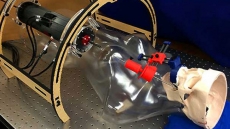
    Researchers have developed a robotic device for people suffering from epilepsy that would enter through the cheek bone, thereby avoiding having to drill ...

    Brain surgery through cheek bone for epilepsy patients

    University of Minnesota officials knock down tweet saying Ebola is airborne

    University of Minnesota officials knock down tweet saying Ebola is airborne
    University spokeswoman Caroline Marin told the Star Tribune in Minneapolis that the university never made such a claim.

    University of Minnesota officials knock down tweet saying Ebola is airborne

    Understanding parents have healthy kids

    Understanding parents have healthy kids
    How well parents understand the daily experiences of their teenagers is linked to the latter's physical and mental well-being, new research suggests....

    Understanding parents have healthy kids

    Stress ups Alzheimer's risk in shy women

    Stress ups Alzheimer's risk in shy women
    Women who worry, cope poorly with stress and experience mood swings in middle age run a higher risk of developing Alzheimer's disease later in life, it showed....

    Stress ups Alzheimer's risk in shy women

    Fish oil supplements don't reduce irregular heartbeat

    Fish oil supplements don't reduce irregular heartbeat
    Although rich in Omega-3 fatty acids, high doses of fish oil supplements do not reduce atrial fibrillation, a common type of irregular heartbeat, found...

    Fish oil supplements don't reduce irregular heartbeat