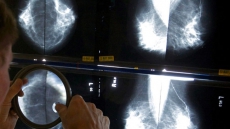
A U.S. health panel wants to widen the number of Americans offered yearly scans for lung cancer by opening the screening to less-heavy smokers.
Lung cancer is the nation's top cancer killer, causing more than 135,000 deaths each year. Smoking is the chief cause and quitting the best protection.
Usually, lung cancer is diagnosed too late for a good chance at survival. But research shows that annual low-dose CT scans, a type of X-ray, can reduce the risk of death when offered to certain people.
In 2013, the U.S. Preventive Services Task Force said current or former smokers who’d gone through a pack of cigarettes a day for 30 years, or an equivalent amount, qualified for the screening starting at age 55.
Now in draft recommendations released Tuesday, the task force said it’s time to expand screening to those who’ve smoked less -- 20 pack-years -- and to start a little sooner, at age 50. The proposed change comes after a newer study found those people are about as likely to benefit as the heavier, older smokers.
If finalized, the new recommendations would make about 15 million Americans eligible for screening, nearly double today’s number, said task force member Dr. Michael Barry of Massachusetts General Hospital.
Importantly, more women and African Americans would qualify, he said.
Lung cancer screening is complicated -- not every hospital is equipped to offer it -- and few of those eligible today receive it, just 6% according to one study the task force cited. In contrast, 60% to 80% of those eligible for breast, colon or cervical cancer screening get checked.
One reason: When lung cancer screening finds an abnormality, people may need invasive testing to tell if it’s really a tumour -- and occasionally those lung biopsies can cause serious, even fatal, complications, said Dr. Otis Brawley of Johns Hopkins University, a cancer expert not involved with the task force.
Still, Brawley welcomed the expanded eligibility because lighter, younger smokers should have lungs in good enough shape to get the benefit of screening without as much risk.
“You’re recruiting healthier smokers, people who you’re more likely to be able to surgically intervene and do something,” he said. “They are moving toward a population where the bad things are less likely to happen.”
The proposal is open for public comment through August 3. If finalized, the screening would be available to the qualified younger, lighter smokers without a co-pay, just as it is today for people who meet the criteria.