Saturday, December 27, 2025
ADVT 
Health

Hepatitis C may become rare by 2036: Study

Darpan News Desk IANS, 05 Aug, 2014 07:15 AM
    The deadly hepatitis C could become a rare disease by the year 2036 owing to new effective drugs and widespread screening, says a study.
     
    "If we can improve access to treatment and incorporate more aggressive screening guidelines, we can reduce the number of chronic HCV (hepatitis C) cases, prevent more cases of liver cancer and reduce liver-related deaths," said Jagpreet Chhatwal, an assistant professor at the University of Texas of the MD Anderson Cancer Center in the US.
     
    In the study, Chhatwal and his collaborators used a mathematical model with information from several sources including more than 30 clinical trials to predict the impact of new therapies called "direct-acting antivirals" and the use of screening for chronic HCV cases.
     
    Researchers developed a computer model to analyse and predict disease trends from 2001-50.
     
    With new screening guidelines and therapies, HCV will affect only one in 1,500 people in the US by 2036, researchers predicted.
     
    HCV - a virus transmitted through the blood - is spread by sharing needles, the use of contaminated medical equipment and by tattoo and piercing equipment that has not been fully sterilised.
     
    Those at the highest risk of exposure are baby boomers - people born between 1945-65.
     
    The model predicts one-time HCV screening of baby boomers would help identify 487,000 cases over the next 10 years.
     
    The study appeared in the journal Annals of Internal Medicine.

    MORE Health ARTICLES

    Prostate cancer linked with sex: Study

    Prostate cancer linked with sex: Study
    A study in the US has found that prostate cancer could be caused by a common infection passed on during intercourse, a leading English daily reported Tuesday.

    Prostate cancer linked with sex: Study

    Don't drink and swim: Drunk zebrafish shows why humans go nuts after booze

    Don't drink and swim: Drunk zebrafish shows why humans go nuts after booze
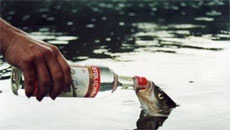
    High on booze, a zebrafish nearly doubled her speed in an experiment, leaving scientists with results that may help them find why some people on a high behave like weirdos in a party.

    Don't drink and swim: Drunk zebrafish shows why humans go nuts after booze

    E-cigarettes boost drug-resistant bacteria

    E-cigarettes boost drug-resistant bacteria
    Despite being labeled as a healthy alternative to cigarettes, e-cigarettes may increase the virulence of drug-resistant and potentially life-threatening bacteria, a study has warned.

    E-cigarettes boost drug-resistant bacteria

    Chip that precisely detects cancer early created

    Chip that precisely detects cancer early created
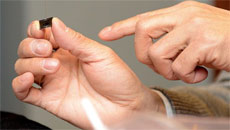
    What if we could diagnose cancer while it was still only affecting a few localised cells? Here comes an ultra-sensitive nano-chip that is capable of detecting cancer early.

    Chip that precisely detects cancer early created

    Yoga gets a new home in Finland

    Yoga gets a new home in Finland
    Yoga is set to get a new home in Finland when a studio is opened at the airport of this capital of the Nordic country.

    Yoga gets a new home in Finland

    Prehistoric skeleton confirms first American origins

    Prehistoric skeleton confirms first American origins
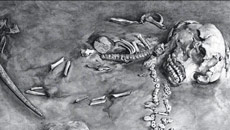
    Researchers said Thursday that they have identified a nearly complete skeleton in an underwater Mexican cave, a discovery that could help resolve a longstanding debate about the origins of the first people to inhabit the Americas.

    Prehistoric skeleton confirms first American origins