Monday, February 9, 2026
ADVT 
Health

High-energy Breakfast Good For Diabetics

Darpan News Desk IANS, 17 Mar, 2015 01:18 PM
    A high-energy breakfast and modest dinner can control dangerous blood sugar spikes all day, says a study.
     
    More than 382 million people in the world suffer from diabetes, predominantly type-2 diabetes.
     
    For these people, blood sugar surges - glucose spikes after meals - can be life threatening, leading to cardiovascular complications.
     
    A new Tel Aviv University study published in Diabetologia proposes a new way to suppress deadly glucose surges throughout the day - eating a high-caloric breakfast and a more modest dinner.
     
    The combined consumption of a high-energy breakfast and a low-energy dinner decreases overall daily hyperglycaemia in type-2 diabetics, said the study.
     
    "We found that by eating more calories at breakfast, when the glucose response to food is lowest, and consuming fewer calories at dinner, glucose peaks after meals and glucose levels throughout the day were significantly reduced," said professor Daniela Jakubowicz of Tel Aviv University.
     
    The new study was conducted on eight men and 10 women aged 30-70 with type-2 diabetes.
     
    Patients were randomized and assigned either a "B diet" or "D diet" for one week.
     
    The B diet featured a 2,946 kilojoule (kj) breakfast, 2,523 kj lunch, and 858 kj dinner, and the D diet featured a 858 kj breakfast, 2,523 kj lunch, and 2,946 kj dinner.
     
    The results of the study showed that post-meal glucose elevations were 20 percent lower and levels of insulin, C-peptide, and GLP-1 were 20 percent higher in participants on the B diet compared with those on the D diet.
     
    Despite the fact that both diets contained the same calories, blood glucose levels rose 23 percent less after the lunch preceded by a large breakfast.

    MORE Health ARTICLES

    Study suggests kids shouldn't have morphine for pain after tonsillectomies

    Study suggests kids shouldn't have morphine for pain after tonsillectomies
    TORONTO — Children who have had their tonsils removed because they have obstructive sleep apnea should be given ibuprofen not morphine for pain after the surgery, a new study suggests.

    Study suggests kids shouldn't have morphine for pain after tonsillectomies

    'Woman On Top' Most Dangerous Sex Position: Study

    'Woman On Top' Most Dangerous Sex Position: Study
    A team of Canadian researchers has discovered that the "women on top' sex position is most dangerous for men, responsible for half of all penile fractures in the bedroom.

    'Woman On Top' Most Dangerous Sex Position: Study

    Avoid Excess Alcohol, Heavy Workout During Winter

    Avoid Excess Alcohol, Heavy Workout During Winter
    Following the drop in temperature during winter, health experts have urged people to avoid excess alcohol intake and heavy physical activity to keep the body warm, as it can lead to heart attack.

    Avoid Excess Alcohol, Heavy Workout During Winter

    Got A Rash From Your Belt Buckle Or Ring? You Could Have Contact Dermatitis

    Got A Rash From Your Belt Buckle Or Ring? You Could Have Contact Dermatitis
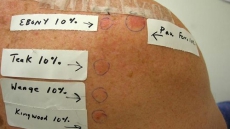
    TORONTO — It could come from the metal on the back of your watch face, or your belt buckle's tendency to brush against the skin on your stomach. Or it could be the hair dye gooped onto your scalp when you go to have your roots touched up. Or the talc in the latex gloves you pull on at work.

    Got A Rash From Your Belt Buckle Or Ring? You Could Have Contact Dermatitis

    Kids Who Play Outdoors Solo, With Pals More Active Than Supervised Peers, Finds Canadian Study

    Kids Who Play Outdoors Solo, With Pals More Active Than Supervised Peers, Finds Canadian Study
    TORONTO — Children permitted to play outdoors on their own or with friends are getting more physical activity than kids who are constantly supervised, a new Canadian study suggests.

    Kids Who Play Outdoors Solo, With Pals More Active Than Supervised Peers, Finds Canadian Study

    Watch out! Your smartphone may be harbouring bacteria

    Watch out! Your smartphone may be harbouring bacteria
    A group of students from University of Surrey in Britain has revealed that the home button on your smartphone may be harbouring millions of bacteria...

    Watch out! Your smartphone may be harbouring bacteria