Thursday, December 25, 2025
ADVT 
Health

HIV vaccine a step closer

Darpan News Desk IANS, 14 Aug, 2014 08:21 AM
     Researchers have uncovered new properties of special HIV antibodies called "broadly neutralising antibodies" or BNAbs, a discovery that could shed light on the pathway the BNAbs take to develop and speed up development of HIV vaccine.
     
    Only a small subset of HIV-infected individuals produce BNAbs.
     
    A vaccine that works by eliciting BNAbs is, therefore, a major goal, and this work suggests that strategies for such a vaccine should focus on speeding up the antibody evolution that occurs after every immunisation.
     
    "This result suggests that a BNAb-eliciting vaccine is possible after all," said lead author Thomas Kepler, a professor of microbiology at Boston University School of Medicine in the US.
     
    Antibodies develop from immune cells known as B cells. When B cells are confronted with foreign elements (known as antigens), some of them experience a high rate of mutations resulting in the substitution of an amino acid within the antibody for another.
     
    When whole strings of amino acids are inserted or deleted, this is known as an indel.
     
    Less than four percent of human antibodies contain indels; in BNAbs this figure is more than 50 percent.
     
    The researchers studied one particular BNAb called CH31, which has a very large indel, to see what role these indels might have played in the acquisition of broad neutralising activity.
     
    They found that the indel was the key event in the development of CH31.
     
    Just putting the indel into antibodies that did not originally have it, increased its effectiveness eight-fold; taking it away from ones that did have it initially, made them much worse, the researchers said.
     
    "When tested on their ability to broadly neutralise HIV, only those CH31 antibodies with indels were able to accomplish the task," Kepler said.
     
    The study appeared in the journal Cell Host and Microbe.
    MORE Health ARTICLES

    Chip that precisely detects cancer early created

    Chip that precisely detects cancer early created
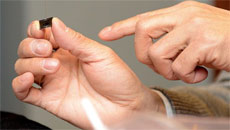
    What if we could diagnose cancer while it was still only affecting a few localised cells? Here comes an ultra-sensitive nano-chip that is capable of detecting cancer early.

    Chip that precisely detects cancer early created

    Yoga gets a new home in Finland

    Yoga gets a new home in Finland
    Yoga is set to get a new home in Finland when a studio is opened at the airport of this capital of the Nordic country.

    Yoga gets a new home in Finland

    Prehistoric skeleton confirms first American origins

    Prehistoric skeleton confirms first American origins
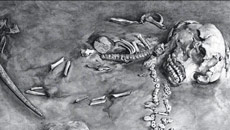
    Researchers said Thursday that they have identified a nearly complete skeleton in an underwater Mexican cave, a discovery that could help resolve a longstanding debate about the origins of the first people to inhabit the Americas.

    Prehistoric skeleton confirms first American origins

    Autism risk higher among kids with parents in technical jobs

    Autism risk higher among kids with parents in technical jobs
    Children of parents who are in technical occupations are more likely to have an autism spectrum disorder (ASD) and a more serious form of autism, a study suggested.

    Autism risk higher among kids with parents in technical jobs

    Antarctic ice sheet collapse has begun, shows research

    Antarctic ice sheet collapse has begun, shows research
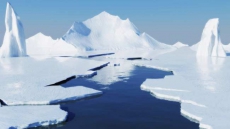
    In an alarming find, scientists have discovered that the collapse of West Antarctic ice sheet - that holds enough water to raise global seas by several feet - has already begun.

    Antarctic ice sheet collapse has begun, shows research

    Now, a virtual pet to help obese kids lose weight

    Now, a virtual pet to help obese kids lose weight
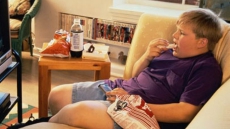
    If your kids are gaining weight because they spend more time indoor playing video games instead of playing outdoor, you may soon turn technology on its head - all thanks to a virtual pet designed to induce kids to physical activities.

    Now, a virtual pet to help obese kids lose weight