Thursday, December 25, 2025
ADVT 
Health

HIV vaccine a step closer

Darpan News Desk IANS, 14 Aug, 2014 08:21 AM
     Researchers have uncovered new properties of special HIV antibodies called "broadly neutralising antibodies" or BNAbs, a discovery that could shed light on the pathway the BNAbs take to develop and speed up development of HIV vaccine.
     
    Only a small subset of HIV-infected individuals produce BNAbs.
     
    A vaccine that works by eliciting BNAbs is, therefore, a major goal, and this work suggests that strategies for such a vaccine should focus on speeding up the antibody evolution that occurs after every immunisation.
     
    "This result suggests that a BNAb-eliciting vaccine is possible after all," said lead author Thomas Kepler, a professor of microbiology at Boston University School of Medicine in the US.
     
    Antibodies develop from immune cells known as B cells. When B cells are confronted with foreign elements (known as antigens), some of them experience a high rate of mutations resulting in the substitution of an amino acid within the antibody for another.
     
    When whole strings of amino acids are inserted or deleted, this is known as an indel.
     
    Less than four percent of human antibodies contain indels; in BNAbs this figure is more than 50 percent.
     
    The researchers studied one particular BNAb called CH31, which has a very large indel, to see what role these indels might have played in the acquisition of broad neutralising activity.
     
    They found that the indel was the key event in the development of CH31.
     
    Just putting the indel into antibodies that did not originally have it, increased its effectiveness eight-fold; taking it away from ones that did have it initially, made them much worse, the researchers said.
     
    "When tested on their ability to broadly neutralise HIV, only those CH31 antibodies with indels were able to accomplish the task," Kepler said.
     
    The study appeared in the journal Cell Host and Microbe.

    MORE Health ARTICLES

    Build super muscles with soy-dairy protein

    Build super muscles with soy-dairy protein
    Not happy with gym results on your muscles? Try a blend of soy and dairy proteins after resistance exercises as this has now been touted as the best way to build muscle mass.

    Build super muscles with soy-dairy protein

    'Love hormone' bonds animals like humans

    'Love hormone' bonds animals like humans
    And you thought you had a patent on 'love hormone' when it comes to showing affection! Dogs too have oxytocin and release it in a good quantity when in love or looking for bonding.

    'Love hormone' bonds animals like humans

    Can you believe it? Metabolism existed even before origin of life, reveales study

    Can you believe it? Metabolism existed even before origin of life, reveales study
    The mystery behind how the first organisms on earth could have become metabolically active has been unlocked.

    Can you believe it? Metabolism existed even before origin of life, reveales study

    Fly's genome study offers hope for sleeping sickness

    Fly's genome study offers hope for sleeping sickness
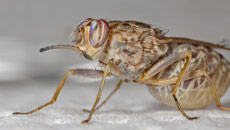
    With genome decoding of tsetse fly that causes the potentially fatal sleeping sickness disease, scientists have discovered new clues to the diet, vision and reproductive strategies of the insect.

    Fly's genome study offers hope for sleeping sickness

    Technology to catch dozing drivers on the go

    Technology to catch dozing drivers on the go
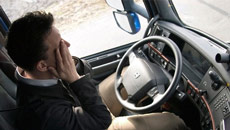
    Long rides at night can now become a lot more pleasant and safe if you listen to researchers who have developed an inexpensive and easier way to find out when the person behind the wheel is about to nod off.

    Technology to catch dozing drivers on the go

    Astronauts may face attention deficit risks

    Astronauts may face attention deficit risks
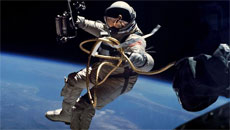
    Astronauts who are radiation-sensitive need to take extra care to protect their brains as they may face risks of attention deficit and slower reaction times, a study suggests.

    Astronauts may face attention deficit risks