Sunday, February 1, 2026
ADVT 
Health

How binge drinking harms the liver

Darpan News Desk IANS, 09 Oct, 2014 06:38 AM
    An Indian-origin researcher has identified epigenetic protein changes caused by binge drinking, a discovery that could lead to treatment for alcohol-related liver diseases.
     
    "Our research shows that epigenetic modifications in histone (protein) structures occur within the liver as a result of heavy binge drinking," explained lead researcher Shivendra Shukla, Margaret Proctor Mulligan professor at the University of Missouri's School of Medicine.
     
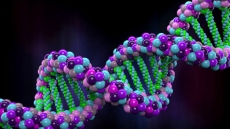
    Epigenetic alterations are changes in genes that are not caused by changes in the DNA sequence or genetic code.
     
    Histones are proteins that act like a spool to compact and organise the thread-like DNA strands which wrap around them.
     
    Histones work to protect the DNA strand and help it function correctly.
     
    Although histone modification does occur naturally, Shukla and his team found that binge drinking results in unnatural modifications to histones.
     
    In turn, these changes adversely affect how a person's genetic code is interpreted and how it is regulated.
     
    "Every response in the body is due to alterations in proteins. Binge drinking is an environmental trigger that negatively affects histones by altering the correct binding of DNA," Shukla informed.
     
    "This initially causes inflammation and damage to the cells as they form, but it is also eventually the cause of more serious diseases such as cirrhosis and cancer," he maintained.
     
    Binge drinking can create an inflammatory response in the liver that is like a cluster bomb, sending out various damaging signals to other organ systems in the body.
     
    "If those organs are working at a lower level of function, then a whole host of physiological processes are affected as a consequence of binge drinking," Shukla noted.
     
    The paper appeared in Hepatology International, the journal of the Asian Pacific Association for the study of the liver.

    MORE Health ARTICLES

    Fatty food may lead to loss of smell

    Fatty food may lead to loss of smell
    Stuffing yourself regularly with pizza or hamburger or any other high-fat food can put you at the risk of losing sense of smell, research warns....

    Fatty food may lead to loss of smell

    Functional human platelets generated in lab

    Functional human platelets generated in lab
    The US scientists have developed a next-generation platelet bioreactor to generate fully functional human platelets in the lab...

    Functional human platelets generated in lab

    'Revolutionary' antibiotics to tackle TB

    'Revolutionary' antibiotics to tackle TB
    Why mycobacteria - a family that includes the microbe that causes tuberculosis (TB) - survive oxygen limitation has long been a mystery but not any more....

    'Revolutionary' antibiotics to tackle TB

    'Simulated' human heart created for better drug testing

    'Simulated' human heart created for better drug testing
    In pioneering research, a scientist has developed a 'simulated' human heart to test the effect of drugs on the heart without using human or animal trials....

    'Simulated' human heart created for better drug testing

    Avian influenza treatments identified

    Avian influenza treatments identified
    In a novel discovery, scientists have identified six potential therapeutics to treat the deadly H7N9 avian influenza...

    Avian influenza treatments identified

    Genes play key role in twins' language deficit

    Genes play key role in twins' language deficit
    Contrary to the popular tendency to attribute delays in early language acquisition of twins to mothers, researchers have found that genes play a significant role in...

    Genes play key role in twins' language deficit