Tuesday, February 10, 2026
ADVT 
Health

How conflict affects women's reproductive health

Darpan News Desk Darpan, 05 Jul, 2014 01:02 PM
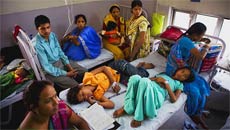
    Gender-based violence, sexually transmitted infections including HIV, and maternal and neonatal mortality and morbidity all flourish in times of conflict, says a review, suggesting clinicians need to be sensitive and aware of the unique challenges of women's reproductive health needs in such times.
     
    "In an increasingly globalised world, a working knowledge of reproductive health during conflict allows clinicians to approach subjects sensitively with women, building a relationship of trust and understanding, allowing women to gain access to services they need," said Benjamin Black from Medecins Sans Frontieres in Sierra Leone.
     
    Approximately 1.5 billion people are currently living in countries affected by conflict, fragility or large-scale violence.
     
    Women and children account for approximately 75 percent of those displaced by conflict and roughly 20 percent of those displaced are women of reproductive age.
     
    Conflict can negatively impact all aspects of reproductive health, directly through damage to services, gender-based violence and forced displacement of populations and indirectly through reductions in the availability of basic healthcare, the researchers noted.
     
    Further, the loss of access to adequate family planning and basic health services also increases reliance on traditional or harmful methods, including unsafe termination of pregnancy.
     
    Looking at maternal mortality specifically, high rates are frequently encountered in conflict-affected populations -- eight of the 10 countries with the highest maternal mortality ratios have experienced current or recent conflict.
     
    Approximately 15 percent of displaced pregnant women will encounter a potentially life-threatening complication, such as haemorrhage, sepsis, obstructed labour or eclampsia, the review noted.
     
    In the context of conflict and displacement, services are often scarce, resulting in delays in reaching the care required. Furthermore, the poor security conditions, exodus of healthcare providers, lack of transport and loss of facilities result in heightened vulnerability and reduced access to life-saving interventions.
     
    Awareness and recognition by medical staff to these issues may be beneficial to the women's care and aid them in accessing the appropriate services, the authors concluded.
     
    The review appeared in the journal The Obstetrician & Gynaecologist
    MORE Health ARTICLES

    State Goes Missing in Healthcare in India; 70 Percent is Private

    State Goes Missing in Healthcare in India; 70 Percent is Private
    More than 70 percent of healthcare in India is provided by corporate houses as a result of which poor people are not able to afford the high cost of medical care provided by private hospitals, health experts have said.

    State Goes Missing in Healthcare in India; 70 Percent is Private

    Canadians top drinkers, Indians not far behind: WHO

    Canadians top drinkers, Indians not far behind: WHO
    In a latest survey released by the WHO, Canadians are drinking more alcohol than most of the rest of the world - followed by Americans

    Canadians top drinkers, Indians not far behind: WHO

    What? Teenagers prefer smart phones over sex!

    What? Teenagers prefer smart phones over sex!
    Teenagers are so touchy about their screens that they are willing to give up almost everything - even the pleasures of a sexual encounter - in exchange for their smart phones, a fascinating research has revealed.

    What? Teenagers prefer smart phones over sex!

    Alcohol does make you hunt for pretty faces!

    Alcohol does make you hunt for pretty faces!
    'Beer Goggle' is real. People become more attracted to the opposite sex after a few drinks and even a small amount of alcohol can shift your attention to gorgeous ladies.

    Alcohol does make you hunt for pretty faces!

    'Nuclear winter' wiped out dinosaurs 66 mn years ago: Study

    'Nuclear winter' wiped out dinosaurs 66 mn years ago: Study
    In a first physical evidence that a sudden dip in temperatures wiped out dinosaurs, a team of scientists has revealed that a massive asteroid hit the earth 66 million years ago, causing “nuclear winter” and the ultimate demise of giant animals.

    'Nuclear winter' wiped out dinosaurs 66 mn years ago: Study

    Soon, corns to grow in caves, mines

    Soon, corns to grow in caves, mines
    In view of growing concerns about genetically modified crops cross-contaminating other crops, scientists have now devised a way to grow dwarf corn stalks in caves and abandoned mines without affecting their yield.

    Soon, corns to grow in caves, mines