Wednesday, December 31, 2025
ADVT 
Health

How Does HIV Virus Evades Immune System

Darpan News Desk IANS, 17 Apr, 2016 12:22 PM
    Scientists have identified a human (host) protein that weakens the immune response to HIV and other viruses.
     
    "Our study provides critical insight on a paramount issue in HIV research: Why is the body unable to mount an efficient immune response to HIV to prevent transmission?" said one of the researchers Sumit Chanda, professor and director of Sanford Burnham Prebys Medical Discovery Institute (SBP) in the US.
     
    The findings showed that a deficiency in NLRX1 -- an intracellular protein -- reduces the replication of the HIV virus.
     
    It also slows down the power of immune system and promotes immunity to infection.
     
    "Importantly, we were able to show that deficiencies in NLRX1 reduce HIV replication, suggesting that the development of small molecules to modulate the innate immune response may inhibit viral transmission and promote immunity to infection," Chanda added, in the paper published in the journal Cell Host and Microbe.
     
    Further, host immune checkpoints that control the immune response to cancer were also discovered.
     
    "This research expands our understanding of the role of host proteins in viral replication and the innate immune response to HIV infection, and can be extended to DNA viruses such as HSV and vaccinia," added another researcher Haitao Guo, postdoctoral research associate at University of North Carolina.
     
    Immune checkpoints are immunological "brakes" that prevent the over-activation of the immune system on healthy cells.
     
    Tumour cells often take advantage of these checkpoints to escape detection of the immune system.
     
    The results have important implications for improving HIV antiviral therapies, creating effective viral vaccines, and advance a new approach to treat cancer, the team concluded.

    MORE Health ARTICLES

    Don't drink and swim: Drunk zebrafish shows why humans go nuts after booze

    Don't drink and swim: Drunk zebrafish shows why humans go nuts after booze
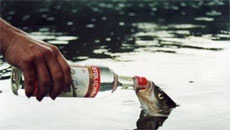
    High on booze, a zebrafish nearly doubled her speed in an experiment, leaving scientists with results that may help them find why some people on a high behave like weirdos in a party.

    Don't drink and swim: Drunk zebrafish shows why humans go nuts after booze

    E-cigarettes boost drug-resistant bacteria

    E-cigarettes boost drug-resistant bacteria
    Despite being labeled as a healthy alternative to cigarettes, e-cigarettes may increase the virulence of drug-resistant and potentially life-threatening bacteria, a study has warned.

    E-cigarettes boost drug-resistant bacteria

    Chip that precisely detects cancer early created

    Chip that precisely detects cancer early created
    What if we could diagnose cancer while it was still only affecting a few localised cells? Here comes an ultra-sensitive nano-chip that is capable of detecting cancer early.

    Chip that precisely detects cancer early created

    Yoga gets a new home in Finland

    Yoga gets a new home in Finland
    Yoga is set to get a new home in Finland when a studio is opened at the airport of this capital of the Nordic country.

    Yoga gets a new home in Finland

    Prehistoric skeleton confirms first American origins

    Prehistoric skeleton confirms first American origins
    Researchers said Thursday that they have identified a nearly complete skeleton in an underwater Mexican cave, a discovery that could help resolve a longstanding debate about the origins of the first people to inhabit the Americas.

    Prehistoric skeleton confirms first American origins

    Autism risk higher among kids with parents in technical jobs

    Autism risk higher among kids with parents in technical jobs
    Children of parents who are in technical occupations are more likely to have an autism spectrum disorder (ASD) and a more serious form of autism, a study suggested.

    Autism risk higher among kids with parents in technical jobs