Saturday, December 20, 2025
ADVT 
Health

How exercise keeps depression at bay

Darpan News Desk IANS, 26 Sep, 2014 11:48 AM
  • How exercise keeps depression at bay
It is known that physical exercise has many beneficial effects on health and researchers have now found how exercise shields the brain from stress-induced depression.
 
Exercise training induces changes in skeletal muscle that can purge the blood of a substance that accumulates during stress, and is harmful to the brain, the study on mice showed.
 
"Skeletal muscle appears to have a detoxification effect that, when activated, can protect the brain from insults and related mental illness," said principal investigator Jorge Ruas from Karolinska Institutet in Sweden.
 
It was known that the protein PGC-1I1 (pronounced PGC-1alpha1) increases in skeletal muscle with exercise, and mediates the beneficial muscle conditioning in connection with physical activity.
 
In this study researchers used a genetically modified mouse with high levels of PGC-1I1 in skeletal muscle that shows many characteristics of well-trained muscles (even without exercising).
 
After five weeks of mild stress, normal mice had developed depressive behaviour, whereas the genetically modified mice (with well-trained muscle characteristics) had no depressive symptoms.
 
"Well-trained muscle produces an enzyme that purges the body of harmful substances. So in this context the muscle's function is reminiscent of that of the kidney or the liver," Ruas explained.
 
The researchers discovered that mice with higher levels of PGC-1I1 in muscle also had higher levels of enzymes called KAT.
 
KATs convert a substance formed during stress (kynurenine) into kynurenic acid, a substance that is not able to pass from the blood to the brain.
 
The study is forthcoming in the journal Cell.
MORE Health ARTICLES

Fly's genome study offers hope for sleeping sickness

Fly's genome study offers hope for sleeping sickness
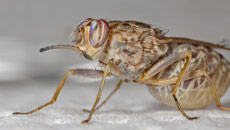
With genome decoding of tsetse fly that causes the potentially fatal sleeping sickness disease, scientists have discovered new clues to the diet, vision and reproductive strategies of the insect.

Fly's genome study offers hope for sleeping sickness

Technology to catch dozing drivers on the go

Technology to catch dozing drivers on the go
Long rides at night can now become a lot more pleasant and safe if you listen to researchers who have developed an inexpensive and easier way to find out when the person behind the wheel is about to nod off.

Technology to catch dozing drivers on the go

Astronauts may face attention deficit risks

Astronauts may face attention deficit risks
Astronauts who are radiation-sensitive need to take extra care to protect their brains as they may face risks of attention deficit and slower reaction times, a study suggests.

Astronauts may face attention deficit risks

Befriend a cyber buddy to stay motivated

Befriend a cyber buddy to stay motivated
Although a human partner is a better motivator during exercise, a software-generated cyber partner can also be effective in making you work a little extra, research reveals.

Befriend a cyber buddy to stay motivated

New method to treat cocaine addiction effectively

New method to treat cocaine addiction effectively
There is hardly any effective medications for cocaine addiction, but researchers have now discovered a new compound that can halt cocaine addiction, raising hope for new treatment for drug addicts.

New method to treat cocaine addiction effectively

How bariatric surgery can help control diabetes

How bariatric surgery can help control diabetes
That bariatric surgery, or obesity surgery, leads to weight loss is well known, but researchers have now identified the mechanism why obesity surgery also leave positive effects on diabetes and heart diseases.

How bariatric surgery can help control diabetes