Saturday, December 20, 2025
ADVT 
Health

How flawed gene can cause deafness

Darpan News Desk IANS, 24 Nov, 2014 11:12 AM
    Researchers have found how mutations in a gene called Tmie can cause deafness from birth, suggesting new avenues for therapies aimed at restoring hearing.
     
    Underlining the critical nature of their findings, researchers were able to reintroduce the gene in mice and restore the process underpinning hearing.
     
    "This raises hopes that we could, in principle, use gene-therapy approaches to restore function in hair cells and thus develop new treatment options for hearing loss," said senior author of the study Ulrich Muller from The Scripps Research Institute (TSRI) in California.
     
    The ear is a complex machine that converts mechanical sound waves into electric signals for the brain to process.
     
    This process, called mechanotransduction, still poses many mysteries.
     
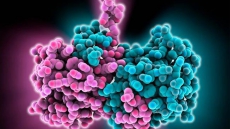
    The researchers discovered how the gene Tmie's protein, TMIE, aids this process.
     
    Once they found what role Tmie plays, the researchers bred a population of mice that lacked the gene.
     
    They examined the hair cells of the mice with electrophysiological techniques and found that without Tmie, no electrical signal could be evoked in hair cells after stimulation.
     
    "The mechanotransduction current is gone; the mouse is totally deaf," said Bo Zhao, a research associate in the Muller lab and first author of the new paper.
     
    In a second experiment, the researchers reintroduced Tmie to mice that had been deaf since birth and found the electrical signals were restored.
     
    The findings appeared in the journal Neuron.

    MORE Health ARTICLES

    Autistic adults at higher risk of sexual victimisation: Study

    Autistic adults at higher risk of sexual victimisation: Study
    The lack of sexual knowledge in adults with autism puts them at a higher risk of sexual victimisation - sexual coercion, unwanted sexual contact attempted rape...

    Autistic adults at higher risk of sexual victimisation: Study

    Decoded: How Ebola virus disables immune response

    Decoded: How Ebola virus disables immune response
    Researchers have revealed how Ebola virus blocks and disables the body's natural immune response - paving the way for developing a drug to treat...

    Decoded: How Ebola virus disables immune response

    HIV vaccine a step closer

    HIV vaccine a step closer
     Researchers have uncovered new properties of special HIV antibodies called "broadly neutralising antibodies" or BNAbs, a discovery that could shed...

    HIV vaccine a step closer

    Computer to help spinal cord injury victims walk

    Computer to help spinal cord injury victims walk
    For helping people with spinal cord injury walk better, researchers have made an artificial connection from the brain to the locomotion centre in the...

    Computer to help spinal cord injury victims walk

    How immune system triggers psychological disorders

    How immune system triggers psychological disorders
    People with high levels of "inflammatory marker" proteins released into the blood in response to infection are at greater risk of developing depression and psychosis, says a study....

    How immune system triggers psychological disorders

    'Love hormone' helps autistic kids

    'Love hormone' helps autistic kids
    Researchers from Stanford University have found that oxytocin has a tremendous effect on such kids' ability to function socially....

    'Love hormone' helps autistic kids