Tuesday, April 7, 2026
ADVT 
Health

How genes affect Ebola patients

Darpan News Desk IANS, 31 Oct, 2014 08:14 AM
    New York- The Ebola virus affects different people differently, say researchers, adding that genetic factors could be behind this mild-to-deadly range of reactions to the virus.
     
    While some people completely resist the disease, others suffer moderate to severe illness and recover, while those who are most susceptible succumb to bleeding, organ failure and shock.
     
    These differences are not related to any specific changes in the Ebola virus itself; instead, the body's attempts to fight infection seems to determine disease severity.
     
    "Our data suggest that genetic factors play a significant role in disease outcome," said Michael Katze from University of Washington.
     
    For the study, the researchers examined the role of an individual's genetic makeup in the course of Ebola disease through a mouse model.
     
    The researchers had obtained genetically diverse group of inbred laboratory mice to study locations on mouse genomes associated with influenza severity.
     
    The scientists examined mice that they infected with a mouse form of the same species of Ebola virus causing the 2014 West Africa outbreak.
     
    The scientists found that disease outcomes and variations in mortality rates were co-related to specific genetic lines of mice.
     
    "The frequency of different manifestations of the disease across the lines of these mice screened so far are similar in variety and proportion to the spectrum of clinical disease observed in the 2014 West African outbreak," co-lead researcher Angela Rasmussen from University of Washington pointed out.
     
    Survivors experienced more activity in genes that order blood vessel repair and the production of infection-fighting white blood cells.
     
    The scientists noted that certain specialised types of cells in the liver could also have limited virus reproduction and put a dampener on systemic inflammation and blood clotting problems in resistant mice.
     
    "We hope that medical researchers will be able to rapidly apply these findings to candidate therapeutics and vaccines," Katze stressed.
     
    The study appeared in the journal Science.

    MORE Health ARTICLES

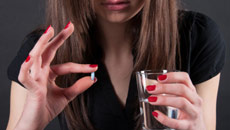
    Birth control pills may influence your mating choice

    Birth control pills may influence your mating choice
    Birth control has not only changed family roles, gender roles and social life of women, it may also influence women's choice of sexual partners, a study has indicated.

    Birth control pills may influence your mating choice

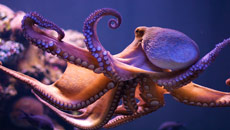
    Why octopus never gets entangled

    Why octopus never gets entangled
    Ever wondered why the hundreds of suckers lining an octopus’ arms do not grab onto the octopus itself?

    Why octopus never gets entangled

    Medicines may help you quit drinking!

    Medicines may help you quit drinking!
    If you wish to stop drinking, visiting the doctor may be the last thing in your mind as you hardly come across doctors prescribing pills that can keep you away from visiting the bars in the evening.

    Medicines may help you quit drinking!

    How drug development can be a child's play

    How drug development can be a child's play
    Making and improving medical drugs could soon become as easy for chemists as stacking blocks is for a child.

    How drug development can be a child's play

    Prostate cancer linked with sex: Study

    Prostate cancer linked with sex: Study
    A study in the US has found that prostate cancer could be caused by a common infection passed on during intercourse, a leading English daily reported Tuesday.

    Prostate cancer linked with sex: Study

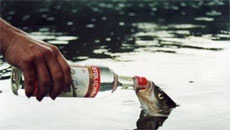
    Don't drink and swim: Drunk zebrafish shows why humans go nuts after booze

    Don't drink and swim: Drunk zebrafish shows why humans go nuts after booze
    High on booze, a zebrafish nearly doubled her speed in an experiment, leaving scientists with results that may help them find why some people on a high behave like weirdos in a party.

    Don't drink and swim: Drunk zebrafish shows why humans go nuts after booze