Sunday, December 28, 2025
ADVT 
Health

How liver can improve diabetes management

Darpan News Desk Darpan, 14 Nov, 2014 11:12 AM
  • How liver can improve diabetes management
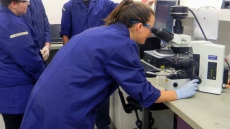
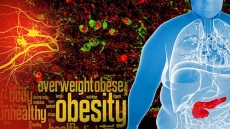
Finding a way to stimulate glucose accumulation in the liver could help manage diabetes and obesity, shows a new research, paving the way for new therapies to fight these increasingly common disorders.
 
The liver stores excess glucose, sugar, in the form of glycogen - chains of glucose - which is later released to cover body energy requirements.
 
Diabetic patients do not accumulate glucose well in the liver and this is one of the reasons why they suffer from hyperglycemia, that is to say, their blood sugar levels are too high.
 
“We have to find treatments to increase hepatic glucose because of its positive effect in diabetes and obesity,” said Joan Guinovart, head of the study from Institute for Research in Biomedicine (IRB Barcelona) in Spain.
 
“It is interesting to observe that what happens in the liver has direct effects on appetite. Here we reveal what occurs at the molecular level,” Guinovart explained.
 
The researchers questioned why mice that accumulated most glycogen in the liver did not gain weight in spite of having access to an appetising diet.
 
In addition to observing that these animals ate less, the scientists found that the brains of these animals showed scarce appetite-stimulating molecules but rather many appetite-suppressing ones.
 
The key to the liver-brain link is ATP, the molecule used by all living organisms to provide cells with energy and which is commonly altered in diabetes and obesity, the researchers found.
 
Nov 14 is World Diabetes Day. 
 
The World Health Organisation estimates that 382 million people worldwide currently live with diabetes and for 2035 it forecasts that one in every 10 people will have this disease.
 
The study appeared in the journal Diabetes.

MORE Health ARTICLES

Hepatitis C may become rare by 2036: Study

Hepatitis C may become rare by 2036: Study
The deadly hepatitis C could become a rare disease by the year 2036 owing to new effective drugs and widespread screening, says a study....

Hepatitis C may become rare by 2036: Study

Hypoventilation patients at risk during air travel

Hypoventilation patients at risk during air travel
Obese people who suffer from hypoventilation should be cautious while travelling via air....

Hypoventilation patients at risk during air travel

Immigrant kids in US at higher obesity risk

Immigrant kids in US at higher obesity risk
Immigrant kids in the US are more likely to grow obese than US-born Caucasian children, a study says....

Immigrant kids in US at higher obesity risk

Artificial anti-cancer molecules created in a jiffy

Artificial anti-cancer molecules created in a jiffy
In what could lead to new anti-cancer drugs, researchers have developed a new method to produce molecules that have a similar structure to peptides...

Artificial anti-cancer molecules created in a jiffy

Neuronal 'sweet spot' can curb obesity

Neuronal 'sweet spot' can curb obesity
Preventing weight gain, obesity and diabetes could be as simple as keeping a nuclear receptor from being activated in a small part of the brain, says a new study....

Neuronal 'sweet spot' can curb obesity

First molecular map to detect vision loss created

First molecular map to detect vision loss created
An Indian-origin researcher-led team has created the most detailed map to date of a region of the human eye, long associated with blinding diseases...

First molecular map to detect vision loss created