Wednesday, February 11, 2026
ADVT 
Health

How malaria parasite resists key trial drug

Darpan News Desk IANS, 25 Jul, 2014 10:09 AM
    Researchers have uncovered a way the malaria parasite becomes resistant to a key clinical trial drug.
     
    The parasite that causes malaria makes a class of molecules called isoprenoids.
     
    These play multiple roles in keeping organisms healthy, whether plants, animals or bacteria.
     
    In malaria, the investigational drug fosmidomycin blocks isoprenoid synthesis, killing the parasite. But over time, the drug often becomes less effective.
     
    "In trials testing fosmidomycin, the malaria parasite returned in more than half the children by the end of the study," said Audrey R. Odom, an assistant professor of pediatrics at Washington University's school of medicine in St. Louis.
     
    "We wanted to know how the parasite is getting around the drug. How can it manage to live even though the drug is suppressing these compounds that are necessary for life?" Odom added.
     
    Fosmidomycin, an antibiotic, is being evaluated against malaria in phase 3 clinical trials in combination with other anti-malarial drugs.
     
    According to Odom, isoprenoid synthesis is an attractive drug target not just for malaria but for tuberculosis and other bacterial infections.
     
    Inhibiting isoprenoid manufacturing in malaria, bacteria or tuberculosis would leave the human pathways safely alone.
     
    In people, perhaps the most well known isoprenoid is cholesterol that is effectively controlled with statin drugs.
     
    The study appeared in the journal Nature Communications.

    MORE Health ARTICLES

    Technology to catch dozing drivers on the go

    Technology to catch dozing drivers on the go
    Long rides at night can now become a lot more pleasant and safe if you listen to researchers who have developed an inexpensive and easier way to find out when the person behind the wheel is about to nod off.

    Technology to catch dozing drivers on the go

    Astronauts may face attention deficit risks

    Astronauts may face attention deficit risks
    Astronauts who are radiation-sensitive need to take extra care to protect their brains as they may face risks of attention deficit and slower reaction times, a study suggests.

    Astronauts may face attention deficit risks

    Befriend a cyber buddy to stay motivated

    Befriend a cyber buddy to stay motivated
    Although a human partner is a better motivator during exercise, a software-generated cyber partner can also be effective in making you work a little extra, research reveals.

    Befriend a cyber buddy to stay motivated

    New method to treat cocaine addiction effectively

    New method to treat cocaine addiction effectively
    There is hardly any effective medications for cocaine addiction, but researchers have now discovered a new compound that can halt cocaine addiction, raising hope for new treatment for drug addicts.

    New method to treat cocaine addiction effectively

    How bariatric surgery can help control diabetes

    How bariatric surgery can help control diabetes
    That bariatric surgery, or obesity surgery, leads to weight loss is well known, but researchers have now identified the mechanism why obesity surgery also leave positive effects on diabetes and heart diseases.

    How bariatric surgery can help control diabetes

    Now, 3D-printed plaster cast to heal wound faster

    Now, 3D-printed plaster cast to heal wound faster
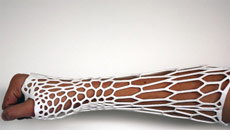
    In what could revolutionise plaster cast technology, a Turkish design student has unveiled a slick 3D-printed cast with ventilation holes that reduces healing time by around 40 percent than currently used plaster casts.

    Now, 3D-printed plaster cast to heal wound faster