Friday, December 26, 2025
ADVT 
Health

How sleep apnoea damages your brain

Darpan News Desk IANS, 11 Sep, 2014 10:27 AM
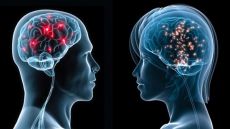
    People suffering from sleep apnoea have weaker brain blood flow that hurts the brain, says a study.
     
    Obstructive sleep apnoea (OSA) is a sleep disorder that occurs when a person's breathing is repeatedly interrupted during sleep, hundreds of times a night.
     
    "This study brings us closer to understanding what causes the problems in the brain of people with sleep apnoea," said lead researcher for the study Paul Macey from the University of California, Los Angeles (UCLA) School of Nursing in the US.
     
    For the study, the researchers measured blood flow in the brain using a non-invasive MRI (magnetic resonance imaging) procedure, which shows the global blood-oxygen level dependent (BOLD) signal.
     
    "By using this method, we were able to show changes in the amount of oxygenated blood across the whole brain, which could be one of the causes of damage we see in people with sleep apnoea," Macey added.
     
    In this study, men and women - with and without obstructive sleep apnoea had their BOLD signals measured during three physical tasks while they were awake.
     
    When they looked at the results people with OSA saw a much weaker brain blood flow response in two of the tasks.
     
    "The difference was because signals from the nerves in the arms and legs had to be processed through the high brain areas controlling sensation and muscle movement, which was slower in people with OSA due to the brain injury," the researchers said.
     
    The study also found the problem is greater in women with sleep apnoea, which may explain the worse apnoea-related outcomes in females than males.
     
    The study appeared in the journal PLOS ONE.

    MORE Health ARTICLES

    Young blood holds key for reversing ageing: Studies

    Young blood holds key for reversing ageing: Studies
    In what could be termed as a game changer for the scientific community, three separate teams of researchers have discovered how the ageing process can be reversed one day in humans - by infusing young blood.

    Young blood holds key for reversing ageing: Studies

    Soon, a method to predict volcanic eruption

    Soon, a method to predict volcanic eruption
    Preventing disasters from volcanic eruption could soon be more effective as scientists have now come closer to developing a method to predicting volcanic eruption behaviour.

    Soon, a method to predict volcanic eruption

    Brain cells tell you to either have sex or go to war!

    Brain cells tell you to either have sex or go to war!
    Secret to stopping a war could lie in following a basic instinct - having sex - as scientists have for the first time discovered that the brain cells mediating attack behaviour and sexual desires are "intimately associated” and “deeply intertwined".

    Brain cells tell you to either have sex or go to war!

    Believe it or not, these ancient crocodiles swallowed dinosaurs!

    Believe it or not, these ancient crocodiles swallowed dinosaurs!
    Even the giant dinosaurs could not intimidate the crocodilians, the ancient relatives of saltwater crocodiles.

    Believe it or not, these ancient crocodiles swallowed dinosaurs!

    Forget brain, wiring in your retina detects motion first

    Forget brain, wiring in your retina detects motion first
    Making sense of at which direction and at what speed a car is moving may not be possible without the interpretation of the brain, but processing of some of these information starts right at the retinas of the eyes.

    Forget brain, wiring in your retina detects motion first

    Low testosterone levels linked to aggressive prostate cancer

    Low testosterone levels linked to aggressive prostate cancer
    Low levels of testosterone can be associated with aggressive prostate cancer and indicate worsening of the disease in men who are afflicted by it, a significant study has said.

    Low testosterone levels linked to aggressive prostate cancer