Tuesday, December 23, 2025
ADVT 
Health

Impulsive behaviour linked to brain connectivity

Darpan News Desk IANS, 23 Jul, 2014 07:01 AM
    In what could help better understand behavioural problems and social adaptation difficulties in children, researchers have found that patterns of brain connectivity are linked with impulsive behaviour.
     
    "We can confirm that the greater the level of impulsiveness in the children, the greater the alteration in the connections between the posterior cingulate cortex and the right angular gyrus, which is also observed in people with anti-social behaviour, and other cerebral areas that are usually activated when performing given cognitive tasks," said Luis Fuentes from the University of Murcia in Spain.
     
    "Impulsiveness is a risk factor for the development of serious behavioural problems," Fuentes noted.
     
    For the study, the experts asked a group of parents to respond to a series of questions related to their children's impulsive behaviour.
     
    With their responses, the 24 children in the sample were classified according to their levels of impulsive behaviour.
     
    Then, through neuroimaging techniques, the experts studied their patterns of brain connectivity. With this information, they analysed the patterns to see if they were related to the level of impulsiveness that the parents had noticed in their children.
     
    Impulsiveness is a personality trait that is associated with difficulties in inhibiting a response in the face of a stimulus, leading to unplanned actions without considering the negative consequences.
     
    The study appeared in the journal Frontiers in Behavioral Neuroscience.

    MORE Health ARTICLES

    Can you believe it? Metabolism existed even before origin of life, reveales study

    Can you believe it? Metabolism existed even before origin of life, reveales study
    The mystery behind how the first organisms on earth could have become metabolically active has been unlocked.

    Can you believe it? Metabolism existed even before origin of life, reveales study

    Fly's genome study offers hope for sleeping sickness

    Fly's genome study offers hope for sleeping sickness
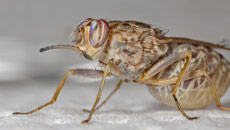
    With genome decoding of tsetse fly that causes the potentially fatal sleeping sickness disease, scientists have discovered new clues to the diet, vision and reproductive strategies of the insect.

    Fly's genome study offers hope for sleeping sickness

    Technology to catch dozing drivers on the go

    Technology to catch dozing drivers on the go
    Long rides at night can now become a lot more pleasant and safe if you listen to researchers who have developed an inexpensive and easier way to find out when the person behind the wheel is about to nod off.

    Technology to catch dozing drivers on the go

    Astronauts may face attention deficit risks

    Astronauts may face attention deficit risks
    Astronauts who are radiation-sensitive need to take extra care to protect their brains as they may face risks of attention deficit and slower reaction times, a study suggests.

    Astronauts may face attention deficit risks

    Befriend a cyber buddy to stay motivated

    Befriend a cyber buddy to stay motivated
    Although a human partner is a better motivator during exercise, a software-generated cyber partner can also be effective in making you work a little extra, research reveals.

    Befriend a cyber buddy to stay motivated

    New method to treat cocaine addiction effectively

    New method to treat cocaine addiction effectively
    There is hardly any effective medications for cocaine addiction, but researchers have now discovered a new compound that can halt cocaine addiction, raising hope for new treatment for drug addicts.

    New method to treat cocaine addiction effectively