Tuesday, December 23, 2025
ADVT 
Health

Indian-Origin Scientist Latha Venkataraman Creates First Single-Molecule Device

Darpan News Desk IANS, 26 May, 2015 12:48 PM
    A team of Columbia Engineering researchers led by an Indian-American scientist Latha Venkataraman has created a single-molecule electronic device which has a potential of real-world technological applications for nanoscale devices.
     
    Under the direction of Venkataraman, researchers created a single-molecule diode which performs 50 times better than all prior designs.
     
    Constructing a device where the active element is only a single molecule, has long been a tantalising dream in nanoscience.
     
    "Our new device represents the ultimate in functional miniaturisation that can be achieved for an electronic device," said Venkataraman.
     
    With electronic devices becoming smaller every day, the field of molecular electronics has become more critical in solving the problem of further miniaturisation.
     
    Single molecule represents the limit of miniaturisation.
     
    The idea of creating a single-molecule diode was suggested by Arieh Aviram and Mark Ratner who theorised in 1974 that a molecule could act as a rectifier, a one-way conductor of electric current.
     
    "It is amazing to be able to design a functioning single molecular circuit," Venkataraman said.
     
    She and her team are now working on understanding the fundamental physics behind their discovery and trying to increase the rectification ratios they observed, using new molecular systems.
     
    The report was published on May 25 in the journal Nature Nanotechnology.

    MORE Health ARTICLES

    Can you believe it? Metabolism existed even before origin of life, reveales study

    Can you believe it? Metabolism existed even before origin of life, reveales study
    The mystery behind how the first organisms on earth could have become metabolically active has been unlocked.

    Can you believe it? Metabolism existed even before origin of life, reveales study

    Fly's genome study offers hope for sleeping sickness

    Fly's genome study offers hope for sleeping sickness
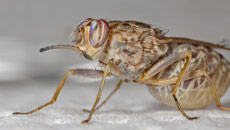
    With genome decoding of tsetse fly that causes the potentially fatal sleeping sickness disease, scientists have discovered new clues to the diet, vision and reproductive strategies of the insect.

    Fly's genome study offers hope for sleeping sickness

    Technology to catch dozing drivers on the go

    Technology to catch dozing drivers on the go
    Long rides at night can now become a lot more pleasant and safe if you listen to researchers who have developed an inexpensive and easier way to find out when the person behind the wheel is about to nod off.

    Technology to catch dozing drivers on the go

    Astronauts may face attention deficit risks

    Astronauts may face attention deficit risks
    Astronauts who are radiation-sensitive need to take extra care to protect their brains as they may face risks of attention deficit and slower reaction times, a study suggests.

    Astronauts may face attention deficit risks

    Befriend a cyber buddy to stay motivated

    Befriend a cyber buddy to stay motivated
    Although a human partner is a better motivator during exercise, a software-generated cyber partner can also be effective in making you work a little extra, research reveals.

    Befriend a cyber buddy to stay motivated

    New method to treat cocaine addiction effectively

    New method to treat cocaine addiction effectively
    There is hardly any effective medications for cocaine addiction, but researchers have now discovered a new compound that can halt cocaine addiction, raising hope for new treatment for drug addicts.

    New method to treat cocaine addiction effectively